Category Archives: Research

Maritime ropes leave behind plasticrusts on rocky coasts
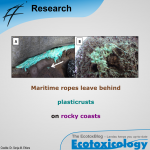
It has recently been discovered that plastic debris can form crusts on intertidal rocks. This phenomenon has been termed- plasticrust, but the formation process and potential plastic sources are unknown. In this study, we show for the first time that discarded maritime ropes are plasticrust sources and that summer rock surface temperature can contribute to plasticrust formation.

Continue reading

Actually protected? Pesticides in nature conservation areas

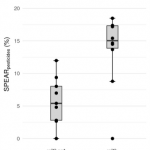
In this blogpost, Jakob Wolfram talks about his recent study “Pesticide occurrence in protected surface waters in nature conservation areas of Germany”. In the study, he analyzed millions of records detailing the occurrence of pesticides in surface waters. The study showed that pesticides frequently occur in strictly protected nature conservation areas and could jeopardize their ecological integrity. 

Continue reading

Avenues for future research to predict the effects of chemicals

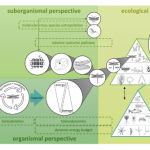
Predicting effects of chemicals in ecosystems is complex due to many factors that influence the action of chemicals. Moreover, understanding chemical effects in ecosystems requires the integration of multiple levels of biological organisation such as cells, organs, organisms, whole populations, communities or ecosystems, which is rarely done. In this blogpost, Anke Schneeweiss and her research team provide a framework for how to integrate these levels by delineating connections between different ecotoxicological perspectives.

Continue reading

Glimpse of 2022 (Part 2)

In this second installment of the ‘Glimpse of the year 2022’ series, we give our readers a glance of another 3 most visited posts in this year. 

Continue reading

Glimpse of 2022 (Part 1)

In the first part of the ‘Glimpse of the year 2022’ series, we give our readers a glance of 3 most visited posts about scientific publications in this year. 

Continue reading

Can heterogeneous landscapes mitigate pesticide stress?

In this blogpost, Moritz Link reports how pesticide toxicity affects stream ecosystems in Transylvania, Romania, a region where traditional agriculture prevails. The researchers analyzed macroinvertebrate communities, leaf litter decomposition and parasite prevalence in relation to physico-chemical stressors in the stream and the landscape.

Continue reading

Penguins among microplastics!

Interest in microplastic contamination in Antarctica is very recent. For this reason, researchers from University of Koblenz – Landau (Germany) and Universidad de Concepcion (Chile) decided to find out a little more about what is happening in the land of the penguins.

Continue reading

Excursion to Mals in South Tyrol: Pesticide monitoring along an altitudinal gradient

In May 2022, a couple of M.Sc. Ecotoxicology students along with Carsten Brühl went to South Tyrol (Italy) to investigate the distribution of pesticides in alpine environments. A part of the group were students from the module Methods in Ecotoxicology, that includes a block lecture and a laboratory test and this year also a field part to perform exposure measurements. The Landau group met with Johann Zaller from BOKU Vienna, author of Daily Poison.

In this blogpost, two of those students, Ken Mauser and Nina Engelhard, present the reason for going to South Tyrol, some brief details about the study and their experience.

Continue reading

How will insecticides affect streams under climate change?

How climate change will alter the effects of toxicants is a key concern in the 21st Century. Rising water temperature can increase the toxicity of some contaminants to stream-dwelling animals in laboratory conditions, as has been shown for the most widely used insecticides in the world – the neonicotinoids. But until this study, whether this translates to more realistic environmental scenarios remained to be tested. In this blogpost, Sam Macaulay talks about his mesocosm experiment studying the effects of rising water temperatures and neonicotinoids on stream invertebrate communities.

Continue reading

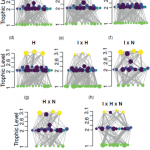
Food web rewiring drives long-term compositional differences and late-stressor interactions at the community level

In this blogpost, Francesco Polazzo talks about how pesticides can cause a drastic change in the organisation and strength of interactions of aquatic food webs. Particularly, after pesticide exposure, changes in the strength of trophic interactions seem to be driving long-lasting effects in community structure. When multiple pesticides act together, they modify both food web structure and interaction’s strength, causing late-stage non-additive effects between stressors. 

Continue reading