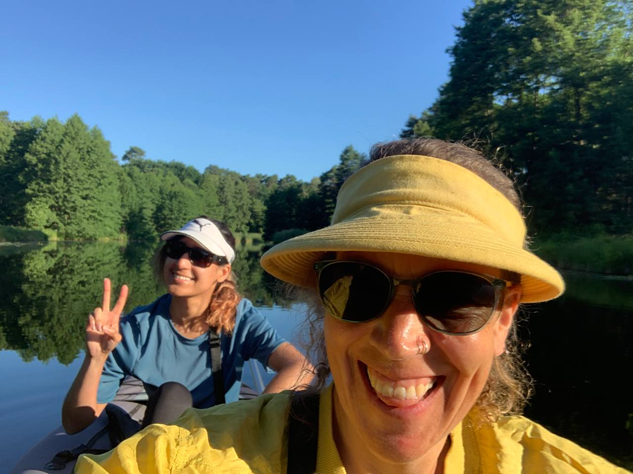
Every Summer Semester, Ecotox Master students do a 2-month internship or AMEO (Applied Module at an External Organization). Today, Ana shares her AMEO experience Die Gewässer Experten.
Hello, my name is Ana Ruiz and I would like to share my experience with Die Gewässer Experten (DGE aka.The Water Experts). This private company, based in Siegburg, offers their services in monitoring, consulting and finding solutions with all water related problems.
My participation
As a chemist with some experience in water quality assessment through laboratory analyses, my internship gave me a completely different perspective on surface-water assessments. Under the European Water Framework Directive, water bodies are evaluated based on their chemical and ecological status. This is done through the observation and measurements of biological quality, physical-chemical parameters and hydromorphological structure. My work with DGE covered collecting diatom samples, recording data on sites for macrophyte assessments, taking measurements of physical-chemical parameters, and even setting traps for crayfish. I also had the chance to learn about their work in the office and meet the entire team.
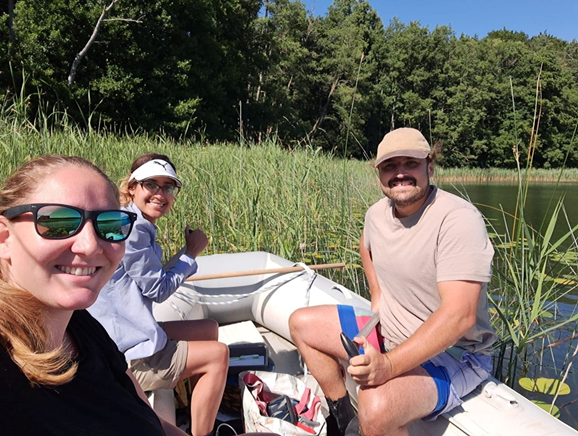
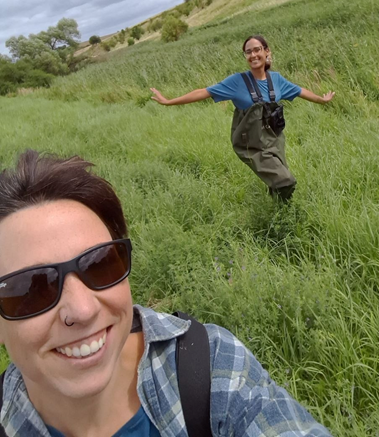
As part of one particular project that oversees the state of rivers in Brandenburg, we travelled to over 200 sites, recording data and taking pictures of macrophytes. This work entailed examining sediment composition, estimating percentages of sediment types and macrophyte coverage along the transects, and recording factors such as daily light exposure, flow velocity and other site characteristics. All these details would later help compare the current water status to what the original status of the river without intervention would be. This is not always an easy task since most of the rivers in Brandenburg would not exist in the first place without human intervention, which leaves a lot of room for interpretation; my time working along with each person in the company gave me a better idea of how these gaps in the guidelines are dealt with.
The Problems?
Of course, not everything is as simple as it sounds. Sometimes we had to reach sampling points with no clear access road, some were surrounded by over 500m of marshland (which I do not recommend trying to walk through), or even after driving for hours we would find a field of cows between us and the sampling point…
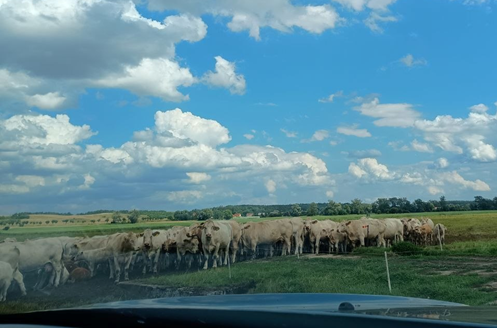
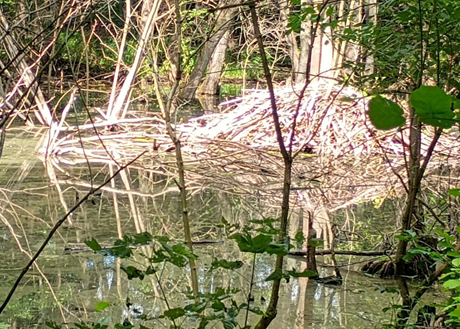
Monitoring involves getting into these hard places and making decisions on whether it is better to move the study point and what considerations to take in case the point has been moved throughout the years of the project. There’s a lot of work that goes on behind the scenes and getting a front row seat to see how environmental monitoring is carried out was very new to me. Also, it was a great chance to discover a lot of Brandenburg and enjoy a few lakes along the way.
The company
DGE is a company that at times works alongside other companies to collaborate on specific projects. Since 2008 they have worked on tailoring sustainable solutions to their clients. They also hold a yearly symposium called the Water Dialogue in which they discuss current and future developments in water related problems, technologies and solutions with experts in the fields of water management and science that come together from even outside of Germany.
If you are interested in learning more, you can check out their platforms:
Website: https://www.gewaesser-experten.de
instagram: @gewaesser_experten
My Final Take
Overall, I am grateful for the opportunity to work alongside a very welcoming and knowledgeable team. This internship introduced me to a side of water-quality assessment that I had not experienced before and it provided me with the chance to work outside of the lab, gain field experience and enjoy the summer heatwave (climate change is no joke, remember to always drink water).