The University of Ghent in Belgium is offering 2 paid PhD positions in the field of ecotoxicology.
Continue reading2 PhD positions in Ecotoxicology at the University of Ghent


The University of Ghent in Belgium is offering 2 paid PhD positions in the field of ecotoxicology.
Continue reading
In a recent publication from the Environmental and Soil Chemistry group, we present a method enabling us to detect anthropogenic TiO2 nanoparticles in soil despite the presence of a high natural background. The method relies of colloidal extraction and trace elements ratio using ICP-MS.
Continue reading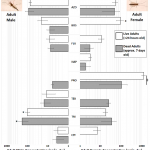
In this blogpost, Alex Roodt talks about how pesticides which are accumulated by emerging aquatic insects during their development can be retained after metamorphosis and may increase the dietary exposure of terrestrial insectivores.
Continue reading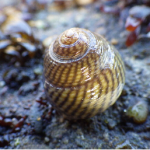
In this blogpost, Sonja Ehlers reports how microplastic loads in rocky intertidal snails from the North Sea, Mediterranean and Atlantic Ocean are consistent across space and time. The majority of the contained microplastics consisted of paint chips that likely derived from ships or maritime equipment. Such paint chips can contain toxic antifouling substances and heavy metals.
Continue reading
The MAGIC team (Meta-Analysis of the Global Impact of Chemicals) at Institute of Environmental Sciences, University of Koblenz – Landau is offering paid research stays and positions for researchers from Ukraine.
Continue readingUpdate 02.03.2022 – Here is a link to a new video of the study on insects contaminated with a mix of pesticides in nature reserves.
In this blog post Carsten Brühl explains the background and findings of their paper on pesticide residues measured on insect samples from nature conservation areas in Germany published in Scientific reports.
Continue reading
In this blogpost, Fola Ogungbemi talks about the effects of mixtures of neuroactive substances. Risk assessment of chemicals is usually conducted for individual chemicals whereas mixtures of chemicals occur in the environment. Considering that neuroactive chemicals are a group of contaminants that dominate the environment, it is then imperative to understand the effects of mixtures of neuroactive substances.
Continue reading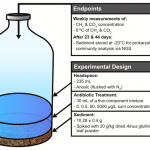
In this blog post, Eric Bollinger provides a brief overview of their recently published paper regarding the effects of antibiotics on methane production in sediments. The study links topics from ecotoxicology, environmental physics, and molecular ecology in the context of climate change.
Continue reading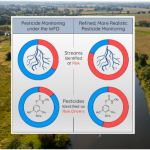
The governmental monitoring under the Water Framework Directive (WFD) shall monitor the status of European water bodies. By carrying out a refined monitoring, a group of scientists from Leipzig and Landau now showed that pesticide risk in surface waters remains widely unnoticed in the WFD monitoring.
Continue reading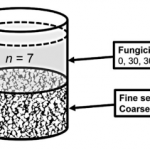
In this blog post, Eric Bollinger provides a brief overview of their recently published paper regarding fungicide effects on microbial leaf decomposition in sediments.
Continue reading