
SETAC conferences provide opportunities for scientific exchange, networking, and professional growth. Oluwafemi Sarumi shares his exciting experiences both at the SETAC 13th Young Environmental Scientists Meeting in York, United Kingdom, and the recently concluded SETAC Europe 36th Annual Meeting in Maastricht, Netherlands.
If you ask me about a seasoned scientific ensemble that brings together frontrunners, groundbreakers, leaders, early-career scientists and students across nationalities, industries, academia, research institutes, government parastatals and business groups, unified by the quest for advancing environmental science, I will echo “SETAC (Society of Environmental Toxicology and Chemistry)”.
My Introduction to SETAC
My first encounter with SETAC was in my lecture room in Rhineland-Pfalz, Germany, at RPTU Kaiserslautern-Landau, when I began my master’s program in Environmental Pollution Management (Ecotoxicology) in October 2024 as a DAAD scholar. It was my lecturer, Prof. Dr. Mirco Bundschuh, a former president of SETAC Europe and SETAC World Treasurer (as of 2024), who introduced SETAC to about 24 of us, new intakes, in his self-introduction during his first lecture on Aquatic Ecotoxicology. Impressed by his manner of delivering science-based results and sincerity in identifying and acknowledging the limitations in science, I immediately knew I needed to join SETAC to learn and garner more experience from other faculty members steering and actively involved in SETAC. Shortly after (January 2025), I opted to join SETAC as a full student member, as I did not want to be limited in any membership benefits.
SETAC Experiences from York to Maastricht
The first event I participated in was the SETAC 13th Young Environmental Scientists (YES) Meeting in York, United Kingdom, in 2025, where I joined other scientists to discuss the challenges and pressures faced by graduate students and early-career researchers. As a prerequisite for attending, I presented my paper (Poster) titled “Polycyclic Aromatic Hydrocarbons in the Breast Milk of Selected Nigerian Lactating Mothers and Implications for Carcinogenic Risk in Newborns”, an excerpt of my recently published bachelor’s thesis at the Federal University of Agriculture Abeokuta (FUNAAB), Nigeria.
Without a doubt, the meeting was really engaging, impactful, eventful, insightful and inspiring as I experienced, first hand, young adults coordinating and steering the affairs of such a large body without any noticeable glitch, knowing no group or individual is perfect. I exchanged ideas with over 100 participants – PhD students, master’s students and invited experts from all over the globe. It was an experience I really do cherish and look forward to being part of again.
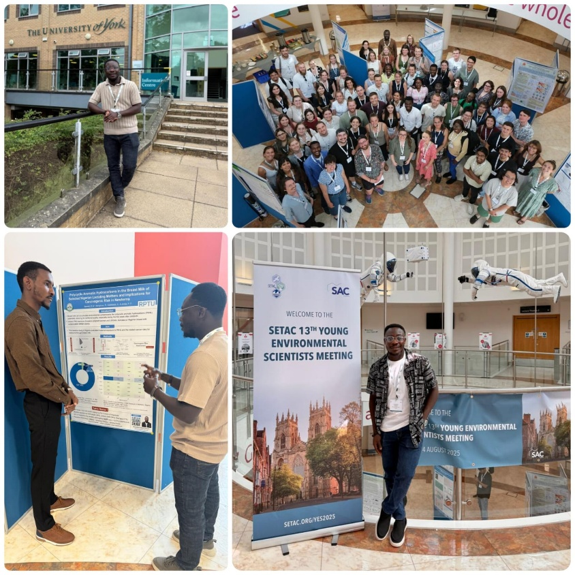
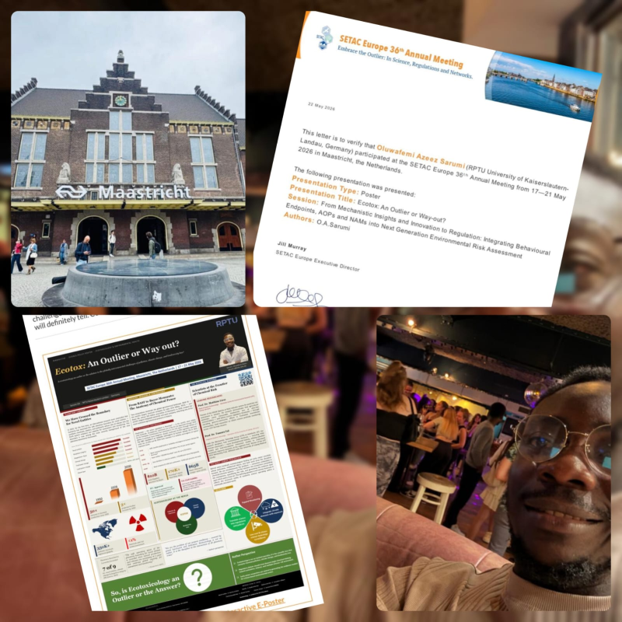
Furthermore, I was amazed at how SETAC has created such an elaborate and independent platform through YES, to groom, train, and nurture students and early-career scientists in leadership roles, creating a smoother transition into the main SETAC body. In the recently concluded SETAC Europe Meeting 2026 in Maastricht, the Netherlands themed “Embrace the Outlier: In Science, Regulations and Networks“, I had the opportunity of presenting my perspective paper (Poster) titled “Ecotox: An Outlier or Way out?”, where I discussed the growing exceedance of novel entities in the planetary boundaries and the need to curtail the use, production and enhance the management of chemicals, pharmaceuticals, microplastics, nanoparticles among others. I also discussed the roles played by leading industries in the production of chemicals and controversies behind certain currently used and approved chemicals in the EU and the US. Lastly, I recognized the roles leading scientists are playing in developing solutions and coaching upcoming scientists, as we strive to find lasting solutions to the global tripartite threat of pollution, climate change and biodiversity loss.
Thank goodness the posters were made available online, as I could not attend in person due to circumstances beyond my control. Likewise, I was so excited to learn that two members of my cohort in RPTU attended as volunteers.
Key Takeaways and Opportunities
In all, SETAC brings to the table the opportunity to learn recent and evolving knowledge and technologies, grow one’s network, explore boundless and life-changing opportunities, receive tailored training, exchange ideas, and meet new people. I had first-hand experience with New Approach Methodologies (NAMs) and coding at the YES Meeting training in York, and engaged massively with other scientists. Other benefits include volunteering, receiving grants, participating in leadership roles, publishing research works in SETAC-affiliated journals and staying up-to-date with recent happenings in environmental science. I was a recipient of the supplementary registration grant for the SETAC Europe Meeting 2026. Likewise, I am now a volunteer student member of the Awards Committee and Education Committee, SETAC Europe.
I heartily and unequivocally recommend SETAC to all students in the field of environmental sciences, ecotoxicology and chemistry. Follow this link to register.
Lastly, I will be delivering a Platform Presentation at the SETAC YES Meeting in Columbia, South Carolina, in August 2026. Feel free to reach out and connect with me on LinkedIn, if you are attending.
Join SETAC today! It is worth it!!