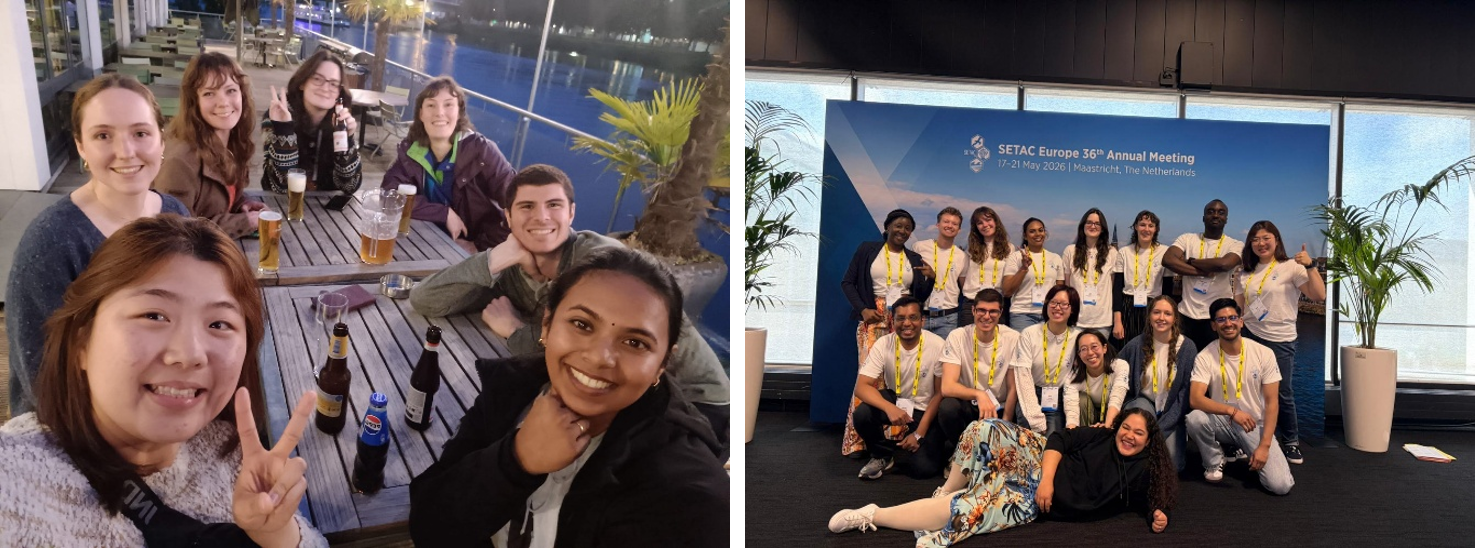
This year, Ecotoxicology Master’s students Dana Hiett and Yugeshini Rajendran had the opportunity to join the SETAC European Conference 2026 as student volunteers in Maastricht. Here, we share some of our experiences, the connections we made and things we learned during this eventful week.
Our Responsibilities as Volunteers
Our responsibilities started on Saturday before anyone else arrived, so we were able to help presenters, exhibitors, and other guests prepare for the conference. Sunday and Monday were definitely the busiest days, where we welcomed over 2,000 people and helped set up more than 400 poster boards! Other volunteers were tasked with helping guests check in every day, or aiding with media preparation to ensure all presentation slides were uploaded in advance, whereas we were both on the session room team, which meant that we sat in the meeting rooms as scientists were presenting their research, helping to coordinate transitions, facilitate audience discussions, and troubleshoot any technical problems (or sometimes just being the person to call tech support for help). Each of the session volunteers had the opportunity to choose session topics that we were most interested in, which helped us stay engaged and network within the communities we were most connected with.
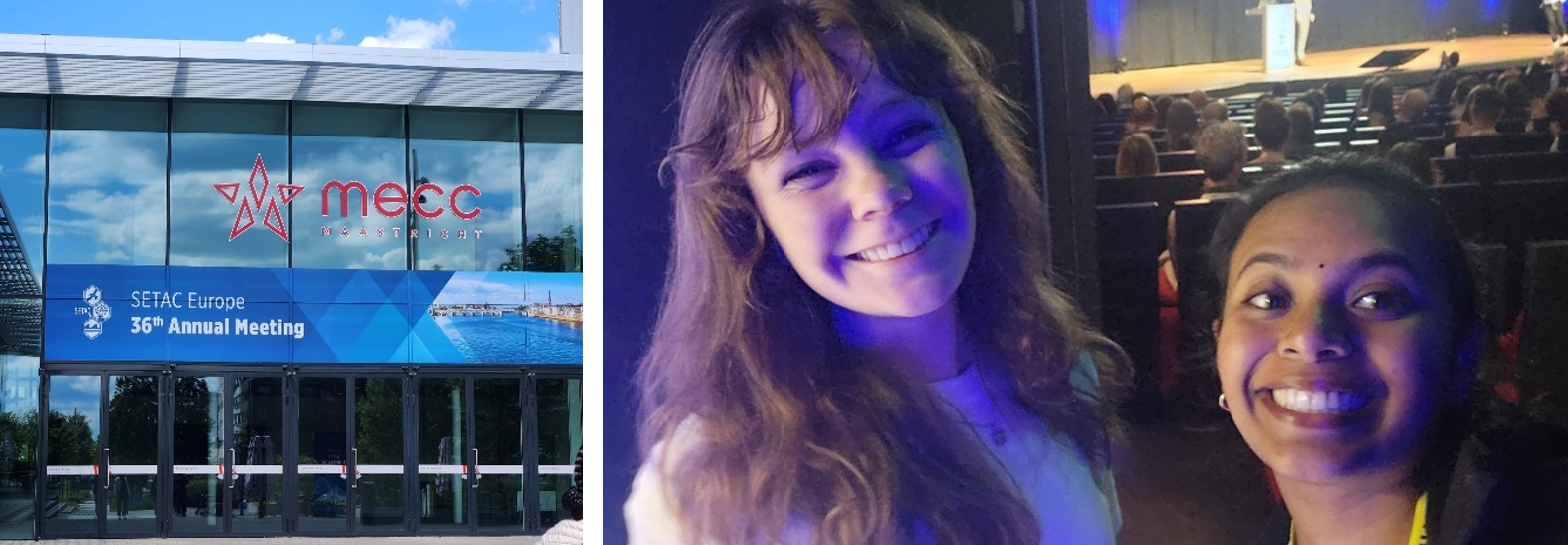
Learning from the scientific sessions
I attended sessions focusing on heavy metal pollution, terrestrial ecotoxicology, and bioremediation, and greatly enjoyed talking with the session chairs about their upcoming projects and developments at the intersections between all of these fields. As I reach the end of my degree program, making these connections and learning more about PhD opportunities and universities to apply to is a huge step for my future career.
Yugeshini’s sessions included PFAS in aquatic and terrestrial ecosystems, PFAS remediation, organic micropollutants, analytical methods and ion mobility spectrometry in environmental monitoring. Coming from a chemistry background, she found the intersection between chemistry and ecotoxicology particularly interesting. The sessions also gave her the opportunity to connect with researchers working in related fields, learn about current developments, and gain valuable insights into possible areas of focus after completing her studies.
Networking and conference highlights
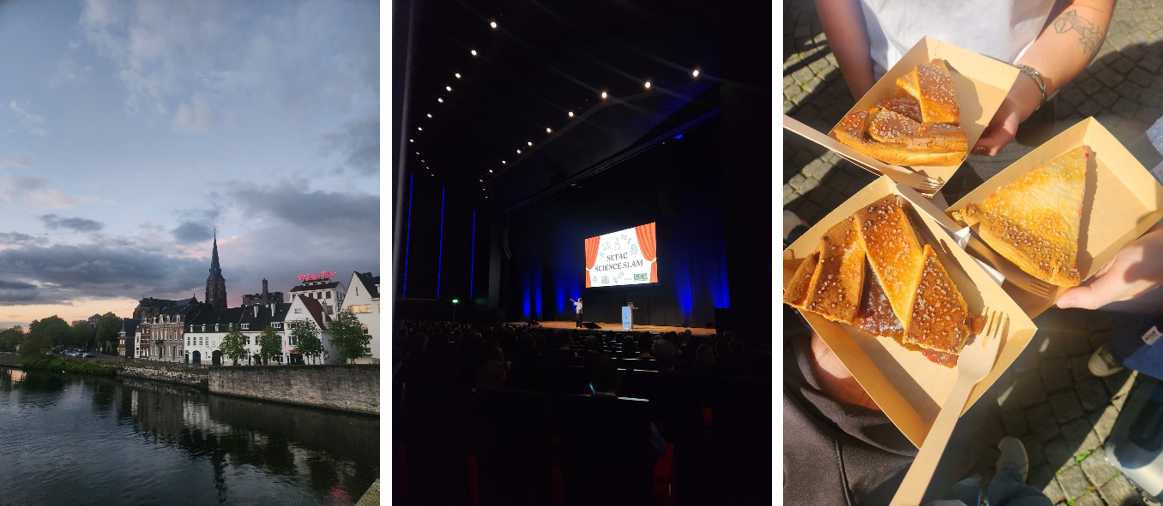
In between sessions, we had the chance to walk around the poster and exhibit halls to connect with people from industry or chat with researchers about their projects. Special topic seminars and interest group meetings were scattered throughout the days and evenings, but it was often difficult to have enough free time to attend with so many other responsibilities to attend to. The days were always packed since we were expected to arrive before the conference opened in the morning and stay until after it closed, but it was really rewarding to see all of the new developments in the field of environmental science and ecotoxicology. The diversity in the research, and the level of excitement around those who were sharing their projects was really great. It was also nice to see familiar faces from RPTU sharing some of the research projects that we have heard about over the course of our studies!
Benefits of volunteering
As a meeting volunteer, we received free accommodation, including breakfasts and lunches, an entrance ticket to the SETAC student party, as well as full SETAC membership for the year. In addition, all volunteers have the opportunity to attend the next year’s conference in Geneva, Switzerland with free registration fees. Applications usually open around October, and can be found at the SETAC website here.
We want to thank Xiluva Hill and all of the other SETAC staff that supported us throughout the week, and also all of the other volunteers that brought us closer to the community and helped us maintain our enthusiasm and sanity.
See you all next year!