Category Archives: Research

Water Quality in European Surface Waters – Finding stories in big data (Part 1)
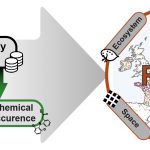
Jakob Wolfram talks about analyzing a large monitoring dataset to understand how water quality in Europe changed over time, how these trends affect different species groups, and which factors contribute to deteriorated water quality. His research on “Water Quality and Ecological Risks in European Surface Waters – Monitoring Improves While Water Quality Decreases” is published in Environment International.

Continue reading

Amphibians are at risk from pesticides in agricultural landscapes

In this post, Christoph Leeb and Elena Adams summarize three new papers on the effects of pesticides on amphibians, which will inform ongoing developments of pesticide testing and environmental risk assessment strategies in the European Union.

Continue reading

Fungicide exposure induces sensitivity differences in aquatic life stages of frogs

In this post, Carsten Brühl and Elena Adams explain the background to their new published paper on amphibian sensitivity at different aquatic life stages and acute effects from aquatic fungicide exposure.

Continue reading

Chemicals cross boundaries: New book highlights the water-land interface

In this post, Mirco Bundschuh and Ralf Schulz talk about a new book on contaminants and ecological interfaces, edited by Johanna M Kraus, David M Walters (both USGS) and Marc. A Mills (US EPA).

Continue reading

InsectExpo: What are the risks of agricultural pesticides to insects?

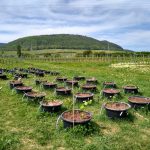
With observations of declining insects in agricultural landscapes, research is focusing on figuring out the role of potential stressors, such as structural homogeneity, fertilizer and pesticide inputs. In this blog, Carolina Honert explains how their project “InsectExpo” can fill these knowledge gaps.

Continue reading

Standartox – Standardizing Toxicity Data

In this post, Andreas Scharmüller introduces Standartox, a tool that continuously incorporates the ever-growing number of ecotoxicity test results in an automated process workflow. It provides single aggregated data points for a specific chemical-organism test combination that represents the toxicity of a chemical. These values can be used for the derivation of toxic units (TU) or species sensitivity distributions (SSD).

Continue reading

Modeling Environmental Threshold Levels

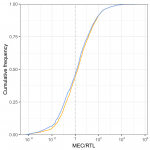
In this post, Lara Petschick talks about the recent publication “Modeling Regulatory Threshold Levels for Pesticides in Surface Waters from Effect Databases”, which explains how existing ecotoxicological effect databases can be used to generate high-quality effect thresholds for large-scale environmental risk assessments.

Continue reading