
In this blogpost, Moritz Link reports how spray drift deposition of the herbicide glyphosate on a mixture of perennial non-target terrestrial plants was simulated and measured. Plant cover and number of open, pollen-producing inflorescences were recorded before and after the exposure event to determine sub-lethal herbicide effects.
Continue readingCategory Archives: Research
Year in Review – Part 3

In the third installment of the ‘Year in Review’ series, we present our readers a glimpse of the last lot of most visited posts in the year 2021.
Continue readingYear in Review – Part 2

In the second installment of the ‘Year in Review’ series, we give our readers a glimpse of 3 most visited posts in the year 2021.
Continue readingYear in Review – Part 1
In this first installment of the ‘Year in Review’ series, we would like to give our readers a glimpse of some of the best blogposts of the year 2021.
Continue readingInsects in nature reserves are contaminated with a cocktail of pesticides
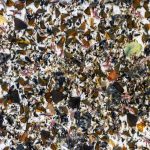
In this blog post Carsten Brühl explains the background and findings of their paper on pesticide residues measured on insect samples from nature conservation areas in Germany published in Scientific reports.
Continue readingNot using synthetic pesticides in organic farming has multiple benefits?
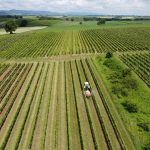
In this blog post Carsten Brühl provides the background for their letter to Trends in Ecology and Evolution (TREE) entitled The rejection of synthetic pesticides in organic farming has multiple benefits.
Continue readingWeed killers change the diet of freshwater snails
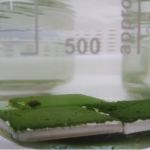
In this post, Marco Konschak reports on the recently published paper “Herbicide-Induced Shifts in the Periphyton Community Composition Indirectly Affect Feeding Activity and Physiology of the Gastropod Grazer Physella acuta”.
Continue readingCan clay minerals make copper oxide nanoparticles toxic?
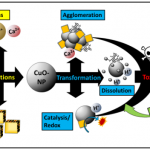
In this blogpost by Jonas Fischer, springtails were exposed to copper oxide nanoparticles at realistic field concentrations in four soils of varying properties. Toxic effects occurred only in loamy soils and mostly at the lowest test concentrations. Reduced nanoparticle agglomeration and clay-nanoparticle interactions were considered being responsible for this observation.
Continue readingThe nematode that senses contaminants
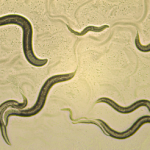
This blogpost is a guest contribution from researchers at European centre of excellence for sustainable water technology (Wetsus) in the Netherlands. In this post, Antoine Karengera talks about their recently published paper dealing with the potential use of the nematode – Caenorhabditis elegans – as a test organism for detecting toxic potencies of pollutants in water sources.
Continue readingMicrobial intermediaries: bacteria induce warring fungi to team-up
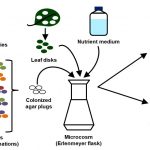
In this post, Patrick Baudy reports on his recently published paper “Fungal-fungal and fungal-bacterial interactions in aquatic decomposer communities: bacteria promote fungal diversity”.
Continue reading