
In this post, Landau alumni Jochen Zubrod talks about FXMATE, their new open-access tool developed to make ecotoxicity data analysis more transparent and reproducible through an intuitive and standardized statistical workflow.
The problem
Statistical evaluation is at the heart of ecotoxicological research and chemical risk assessment. Yet, despite detailed guidance from organizations such as the OECD, statistical practices across laboratories and institutions often vary considerably. These inconsistencies are frequently rooted in custom code, opaque workflows, or the use of proprietary tools, which can challenge reproducibility and compromise the robustness of effect estimates, potentially putting the environment at risk.
An open-access solution for reproducible ecotoxicological statistics
To tackle these issues, we at Palinera are developing FXMATE (Effects MAde Totally Easy), an open-access software project designed to make statistical analyses of ecotoxicity test data both transparent and reproducible. FXMATE is built using state-of-the-art R capabilities and implemented as an interactive Shiny application packaged in a containerized environment, ensuring easy deployment and guaranteed reproducibility across platforms.
Guideline-aligned and user-friendly
FXMATE guides users through all essential steps of ecotoxicological data evaluation: from data validation and guideline-specific preprocessing to dose-response modelling and hypothesis testing. The workflows are aligned with guidelines, such as OECD 201 (algal growth inhibition) and OECD 211 (Daphnia reproduction).
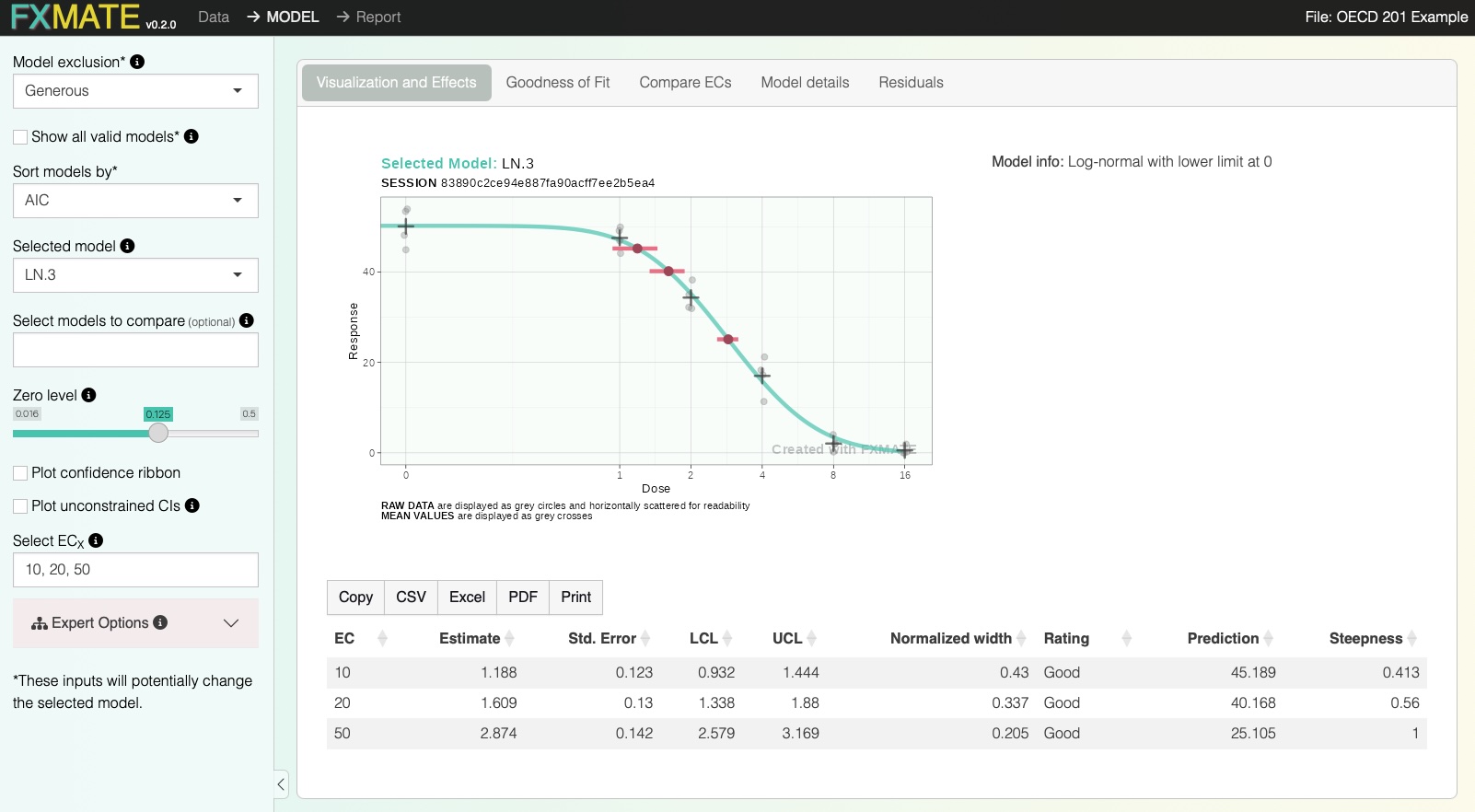
Through an intuitive user interface, FXMATE combines analytical rigor with accessibility. It automates key procedures while allowing users with statistical expertise to retain full control over decisions. Built-in guidance and guardrails help ensure statistically sound outcomes, even for those less familiar with complex statistical methods.
Advanced features and modular architecture
FXMATE already includes advanced statistical functionalities such as bootstrapping and model averaging, improving the precision and robustness of effect estimates. Its modular architecture enables straightforward future extensions to address emerging needs in environmental risk assessment and ecotoxicological research.
Towards transparency and standardization in ecotoxicity evaluation
By merging methodological rigor, practical usability, and open science principles, FXMATE aims to enhance the consistency and transparency of ecotoxicity data analysis across academia, industry, and regulatory agencies. In doing so, it contributes to a broader community effort to modernize ecotoxicological statistics and strengthen the scientific foundations of environmental risk assessment.
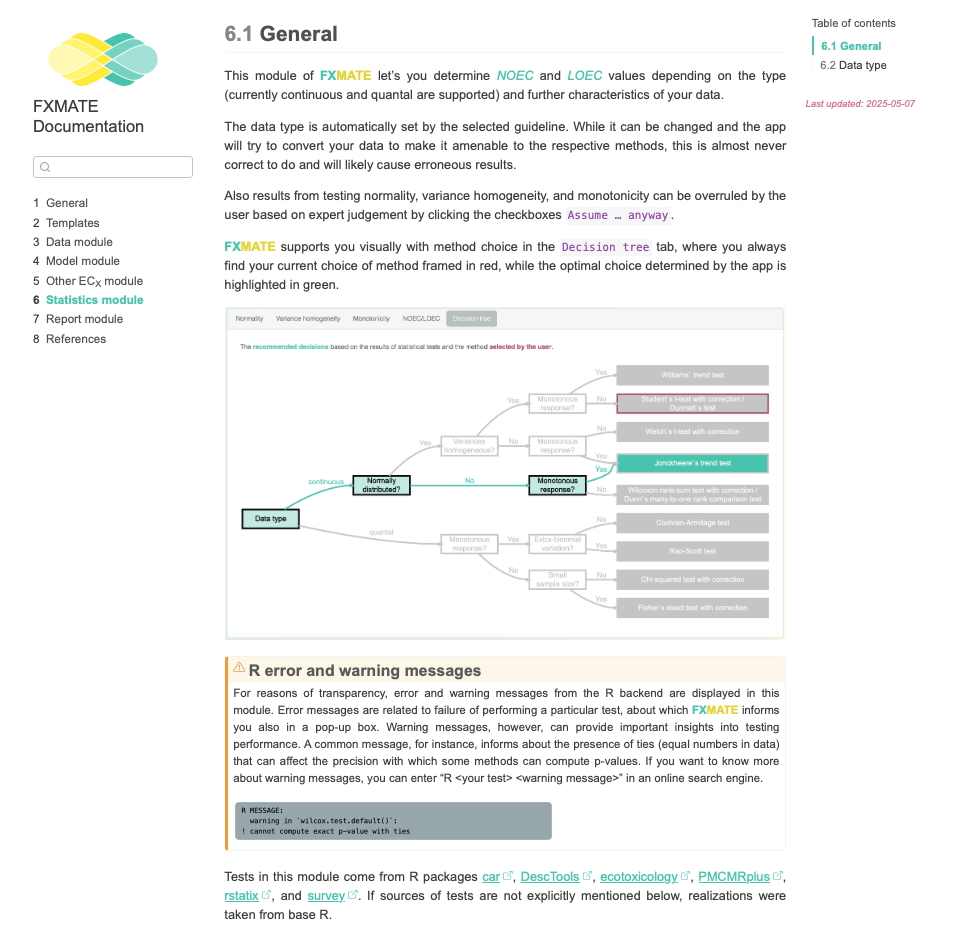
For more information and to test FXMATE yourself, visit www.palinera.com or explore the project documentation at docs.palinera.com.
FXMATE is developed by the team at palinera GmbH, consisting of current and former Landau researchers Eric Bollinger, Dominic Englert, and Jochen Zubrod, together with software developer Felix König.