In this series of posts, Carsten Brühl reports about his current trip to Costa Rica. Part 5 is all about air sampling in a cloud forest to detect persistent pesticides travelling to remote areas.
Costa Rica: A tropical e(coto)xperience – Part 5

In this series of posts, Carsten Brühl reports about his current trip to Costa Rica. Part 5 is all about air sampling in a cloud forest to detect persistent pesticides travelling to remote areas.
In this series of posts, Carsten Brühl reports about his current trip to Costa Rica. Part 4 is all about his visit of the Laguna de Madre Dios, where researchers sample water and fish to analyse for pesticide residues originating from upstream banana and pineapple plantations.
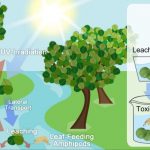
In this post, we talk about our recently published paper “UV-irradiation and leaching in water reduce the toxicity of imidacloprid-contaminated leaves for the aquatic leaf-shredding amphipod Gammarus fossarum“.
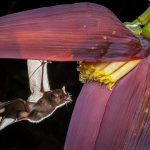
In this series of posts, Carsten Brühl reports about his current trip to Costa Rica. Part 3 is all about the students Priscilla and Julian who tell us about their bat conservation efforts in agroecosystems such as banana plantations.
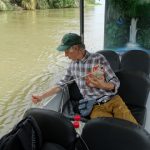
In this series of posts, Carsten Brühl reports about his current trip to Costa Rica. Part 2 is all about his host Clemens Ruepert who is an experienced environmental analytical chemist at the Regional Institute for Studies on Toxic Substances of the National University of Costa Rica.
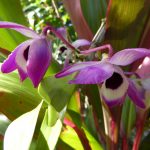
In this series of posts, Carsten Brühl reports about his current trip to Costa Rica. Part 1 is all about his first impressions and what he learned about pesticide use on tropical crops such as the bananas that get shipped to Germany. Continue reading
The German/French Graduate Academy “Security-Risk-Orientation” (SERIOR) is hosting a bilingual event “Rheingold oder Source de risque” to look at the River Rhine from a societal, economic and ecological perspective in Landau on 22 March 2018.
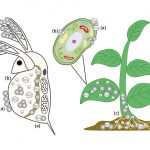
In this post, Simon Lüderwald talks about their recently accepted literature review “Nanoparticles in the environment – where do we come from, where do we go to?”.
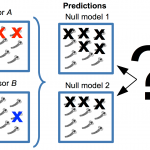
In this post, Ralf Schäfer reports on their recently published paper “Advancing understanding and prediction in multiple stressor research through a mechanistic basis for null models”.
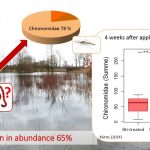
In this post, Kathrin Theissinger talks about their recently published paper “Using DNA metabarcoding for assessing chironomid diversity and community change in mosquito controlled temporary wetlands”.