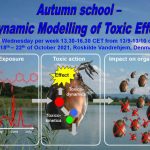
Autumn school “Dynamic Modelling of Toxic Effects” in Sept-Oct 2021 (online & in-person in Denmark)

Participants will learn how to analyse (eco)toxicity data, mechanistically and with explicit modelling of temporal aspects. The pre-course online lectures run from Sept 13 – Oct 13, 1:30-4:30 PM CET; the in-person training takes place on Oct 18-22 in Denmark (optional).

Continue reading

Insect decline? A critical discussion from a freshwater perspective – Talk on Feb 3, 2021, at 6 PM MET

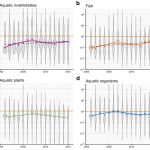
Prof. Dr. Ralf B. Schäfer of Uni Koblenz-Landau will give a talk on the current research and debates surrounding insect decline, with focus on the key drivers, trends among aquatic versus terrestrial insects, the role of pollutants, and mitigation measures.

Continue reading

Amphibians are at risk from pesticides in agricultural landscapes

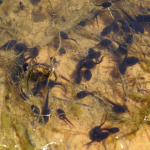
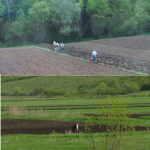
In this post, Christoph Leeb and Elena Adams summarize three new papers on the effects of pesticides on amphibians, which will inform ongoing developments of pesticide testing and environmental risk assessment strategies in the European Union.

Continue reading

Save the date: SystemLink virtual conference on aquatic-terrestrial linkages on January 28 & 29

The SystemLink graduate school at the University of Koblenz Landau, Institute of Environmental Sciences (iES), will host a free virtual research workshop on the topic of anthropogenic alterations of aquatic-terrestrial linkages.

Continue reading

“Daily Poison, Pesticides” – New popular science textbook

In this post, Carsten Brühl introduces a new popular science book by Johann Zaller, titled “Daily Poison, Pesticides – an Underestimated Danger”. The book sheds light on the usage and environmental effects of pesticides, written for scientists and non-scientists alike.

Continue reading

Fungicide exposure induces sensitivity differences in aquatic life stages of frogs

In this post, Carsten Brühl and Elena Adams explain the background to their new published paper on amphibian sensitivity at different aquatic life stages and acute effects from aquatic fungicide exposure.

Continue reading