Author Archives: Adetola Adebowale

PhD fellowship: “The effect of formulation of dsRNA based pesticides on non-target species”

kopenhagen university logo

The Department of Plant and Environmental Science, Section for Environmental Chemistry and Physics, at the University of Copenhagen, invites applicants for a PhD fellowship in “The effect of formulations of dsRNA based pesticides on non-target species”. The project is part of the research project ENvironmental SAFEty of biotechnological plant protection products based on short interfering RNA and peptides, which is financed by The Novo Nordisk Foundation.

Continue reading

AMEO at RIFCON – Adetola Adebowale (2025)

Every Summer Semester, Ecotox Master students do a 2-month internship or AMEO (Applied Module at an External Organization). Today, Adetola Adebowale tells us about his AMEO experience in the Invertebrate and Residue Field Studies department at RIFCON GmbH in Hirschberg.

Continue reading

Uncovering the impact of antimicrobials on the gut microbiome of invertebrates

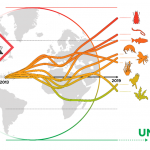
graphical abstract

A new study examining the effects of an antibiotic, a fungicide, and their mixture on the gut microbiome of Gammarus fossarum found that the antimicrobial exposure altered the relative abundance of bacterial classes within the gut microbiome, with effect directions depending on the type of antimicrobial used.

Continue reading

Total Applied Toxicity reveals 15 years of change in pesticide pressure across France

Graphical Abstract

A new study investigating temporal and spatial trends in pesticide pressure in France over 15 years (2008 to 2022) using the Total Applied Toxicity (TAT) highlights the importance of TAT for evaluating pesticide pressure and identifying areas for mitigation strategies, while also noting the impact of recent regulatory actions.

Continue reading

Research Associate (m/f/d)/Doctoral student position in Soil Chemistry

In the framework of the project “Energy Structures – Energy Sustains Dissipative Structures in Soil Systems ” (https://soilsystems.net/projects-partners/2-p1-energy-structures/), funded by the DFG, the RPTU Landau and the Helmholtz Center for Environmental Research (UFZ) offers a PhD student position in Soil chemistry, with the earliest possible starting date in January 2026 and a project duration of three years. 

Continue reading

AMEO at BASF – Krishna Venugopalan Variyer (2025)

Every Summer Semester, Ecotox Master students do a 2-month internship or AMEO (Applied Module at an External Organization). Today, Krishna Venugopalan Variyer tells us about her AMEO experience in the Aquatic Department at the BASF Agricultural Center in Limburgerhof.

Continue reading

AMEO at Bayer – Bailey Tock (2025)

Every Summer Semester, Ecotox Master students do a 2-month internship or AMEO (Applied Module at an External Organization). Today, Bailey Tock tells us about her AMEO experience in the Experimental Aquatic Unit at the Bayer Monheim campus

Continue reading

AMEO at Fraunhofer IME – Vivien McGuire and Janna Schulte (2025)

Every Summer Semester, Ecotox Master students do a 2-month internship or AMEO (Applied Module at an External Organization). Today, Vivien McGuire and Janna Schulte tell us about their AMEO experience at Fraunhofer Institute for Molecular Biology and Applied Ecology (IME), Schmallenberg.

Continue reading

Too many chemicals, too little assessment: Current status of global chemical pollution

A new extensive review article assessing the state of global chemical pollution highlights the challenges for global chemical assessment, regulation and management systems.

Continue reading

Invisible cocktails: unravelling nanoparticle pollution in urban and rural air

Harbour air pollution by Chris LeBoutillier form Unsplash

Every day, we inhale and exhale without a second thought. Why? Because we believe we breathe fresh air. The fresh air we hope to breathe consists of a mixture of simple gases, mainly oxygen and nitrogen. However, this air can be polluted with very different tiny particles emitted from natural sources and human (anthropogenic) activities in our day-to-day life, which might be harmful to our health. These tiny particles are known as nanoparticles. This blog post explains how nanoparticles are released in our environment, their sources, how they end up in the air we breathe, the nanoparticle cocktail in urban and rural areas, and their potentially harmful effects on humans and the environment.

Continue reading