
Every Summer Semester, Ecotox Master students do a 2-month internship or AMEO (Applied Module at an External Organization). Today, Sarah shares her AMEO experience at Utrecht University in the Netherlands.
Introduction
I am Sarah, and I completed a 12-week internship at Utrecht University in the Netherlands. I joined the Geoscience Team within the Copernicus Institute for Sustainable Development, under the supervision of Assistant Professor Dr. Stefanie Lutz. The institute conducts interdisciplinary research and education to accelerate the transition to a sustainable future, addressing critical global challenges such as climate change, ecosystems and biodiversity, the circular economy, and sustainable energy and water systems.
From PFAS to Pesticide data analysis
Initially, my internship was supposed to focus mainly on PFAS fieldwork. But as is so often the case in life, and especially in research, plans tend to change faster than they can be realized. Just weeks before I arrived, safety regulations concerning PFAS fieldwork were tightened significantly, and as a result, any PFAS-related fieldwork was put on ice for a while.
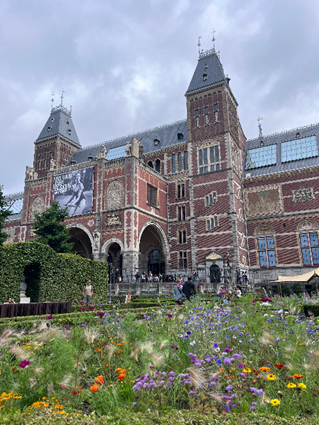
From then on, my main project shifted to data analysis. It’s worth knowing that the cut-flower sector is one of the Netherlands’ largest export industries and among its most widely cultivated crops. The vibrantly colored flower fields in the famous Bloembollenstreek in the west of the country attract thousands of tourists every year!
Yet all this colour comes at a cost. Pesticide use in the sector is immense, and far less tightly regulated than for food crops. As is well known, pesticides pose a considerable threat to both environmental and human health, which is one of the reasons why an international project about sustainability in the Cut-Flower Sector was initiated. As part of it, a symposium took place, which, luckily, fell within my very first week in Utrecht. It consisted of several rounds of panel discussions, bringing together people from research and industry, shedding light on different perspectives and aspects of sustainability in the cut-flower sector, which was very inspiring!
My own work then involved gathering pesticide concentration data from Dutch surface water bodies, sourced from a range of environmental databases, aiming to link these concentrations to cut-flower cultivation and, in turn, to varying hydrological conditions.
Fieldwork and Research
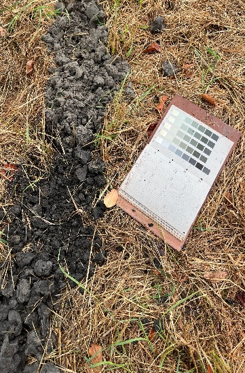
Eventually, I also did get the opportunity to briefly take part in some PFAS-related fieldwork after all, gathering and categorizing soil samples and installing piezometers.
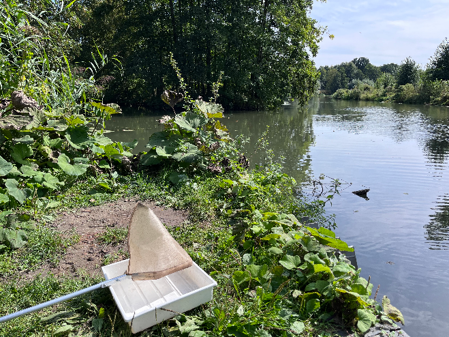
I also got the chance to briefly look into the water quality within the university grounds, which was quite interesting. The Dutch water management system is highly engineered, comprising polders, artificial drainage networks, and an extensive web of canals and ditches, and it undergoes constant monitoring. It has no real equivalent in Germany, nor almost anywhere else, uniquely Dutch and quite impressive!
Beyond my research project, I was able to join several free workshops, expanding my knowledge in areas such as AI for insect detection and monitoring, research data management, and an introduction to Python.
Exploring the Netherlands
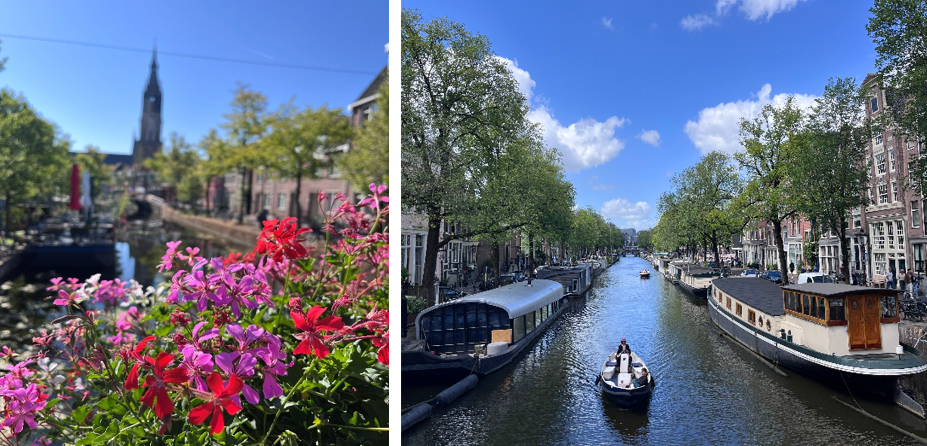
Utrecht itself is simply a lovely city, international, and full of energy, with countless events of every kind happening all the time. But on weekends, I took the opportunity to explore the country. The public transport system is fantastic, and most of its well-known cities are conveniently clustered in the west, near the coastline. In less than two hours, I could reach Amsterdam with its beautiful museums, Den Haag, a modern city with its own beach, Rotterdam with its famous harbor, Maastricht, and many more. I can wholeheartedly recommend travelling the country.
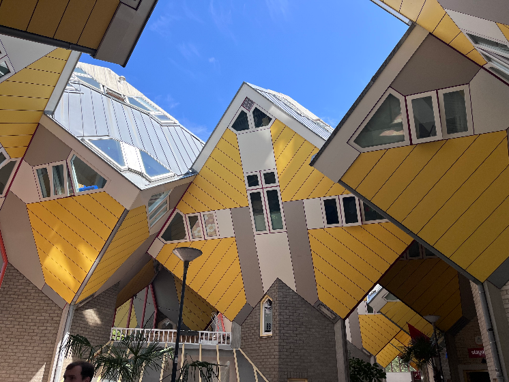
Beyond simply being beautiful to walk through — and really, who doesn’t love strolling along canals lined with historic buildings and soaking up the atmosphere? — these trips were also culturally immersive. Den Haag is home to the Peace Palace, where the International Court of Justice holds its sessions. In Maastricht, the “Maastricht Treaty” was signed, laying the foundation for the European Union as we know it today and ultimately enabling this internship.
My special thanks go to Assistant Professor Dr. Stefanie Lutz for her supervision and for generously sharing her experience with me. I would also like to thank Erasmus+ for funding and making this wonderful internship abroad possible.