In this post, Ralf Schäfer reports on their recently published paper “Advancing understanding and prediction in multiple stressor research through a mechanistic basis for null models”.
How can we predict the effect of multiple stressors?
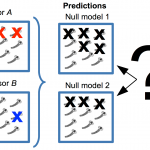

In this post, Ralf Schäfer reports on their recently published paper “Advancing understanding and prediction in multiple stressor research through a mechanistic basis for null models”.
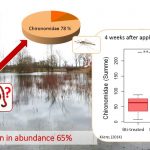
In this post, Kathrin Theissinger talks about their recently published paper “Using DNA metabarcoding for assessing chironomid diversity and community change in mosquito controlled temporary wetlands”.
In this post, we briefly highlight the 100th Volume Special Issue of the Bulletin of Environmental Contamination and Toxicology (BECT), which is freely accessible until 23 March 2018.

In this post, Elena Adams is presenting her new project “The impact of pesticides on amphibians – Effects of environmentally relevant pesticide mixtures and formulations on German Anura” for which she received a doctoral scholarship of the German Federal Environmental Foundation.
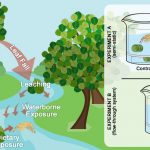
In this post, we talk about our recently published paper “Relative importance of dietary uptake and waterborne exposure for a leaf-shredding amphipod exposed to thiacloprid-contaminated leaves”.

In this post, Gabriela Kalcikova talks about their recently published paper “Wastewater treatment plant effluents as source of cosmetic polyethylene microbeads to freshwater”.

In this post, Carsten Brühl informs about their recently published paper “Decreasing Bacillus thuringiensis israelensis sensitivity of Chironomus riparius larvae with age indicates potential environmental risk for mosquito control”.
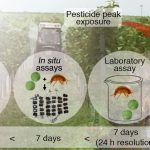
In this post, we talk about our recently published paper “Transient effects following peak exposures towards pesticides – an explanation for the unresponsiveness of in situ measured functional variables”.

In this post, Matthias Wieczorek talks about their recently published paper “Structural and functional effects of a short-term pyrethroid pulse exposure on invertebrates in outdoor stream mesocosms”.
RWTH Aachen University is hosting the first Annual Young Water Researchers’ Symposium for PhD and advanced master’s students on November 24th, 2017. The one-day meeting aims at connecting young researchers and professionals in the area of water-related research.