
Every Summer Semester, Ecotox Master students do a 2-month internship or AMEO (Applied Module at an External Organization). Today, Evelina shares her AMEO experience at the Leibniz Institute for Baltic Sea Research, Warnemünde.
Hi, I am Evelina Ng and I recently completed a 3 month internship, from June to September 2026, with the Environmental Microbiology working group in the Leibniz Institute of Baltic Sea Research, Warnemünde (IOW). My main jobs were to prepare and carry out sampling campaigns and the subsequent laboratory work.
The overarching aim of the project was to create an accurate predictive model, using machine learning, to forecast the emergence of Vibrio Vulnificus in the Baltic Sea. Vibrio Vulnificus is a marine bacterium that has caught the attention of news outlets, being dubbed as “flesh-eating bacteria”, with cases of infections caused by Vibrio Vulnificus being reported throughout many European and Eastern United States coastlines.
Sampling campaign and Laboratory work
The samplings were usually conducted twice a week consisting of water sampling and a drone flight. For the water sampling, we would collect Baltic Sea water and measure its physico-chemical properties. The drone was fitted with a hyperspectral camera that records images of the water surface, the data collected is then compared to the environmental measurements taken from the water sampling.
The frequency of samplings was weather-dependent as the hyperspectral camera could capture the best results when it was a clear and sunny day; there was a week we went for sampling 4 times! We brought our equipment from the research institute to a fixed spot on the beach and carry out our sampling there.
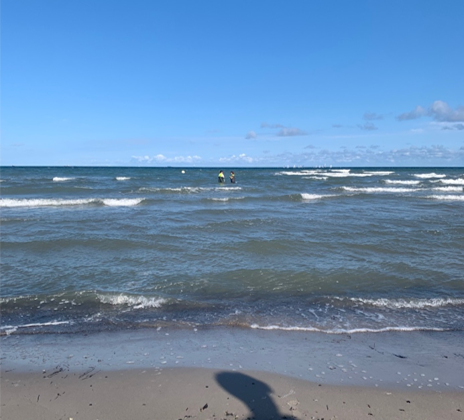
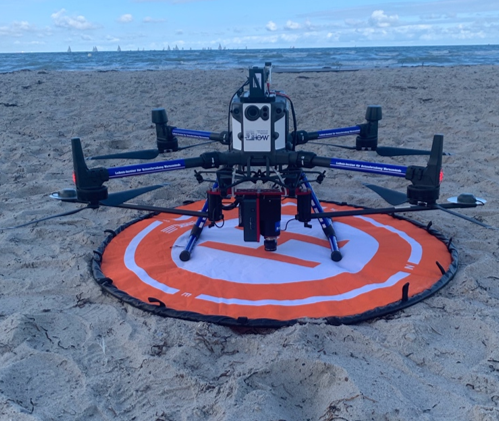
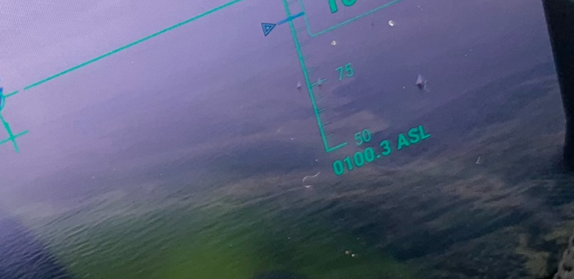
In addition to the physico-chemical properties of the water, there were many other parameter that were measured in the laboratory, such as types of bacteria, nutrients, chlorophyll – a, pigments, and the environmental DNA in the water samples.
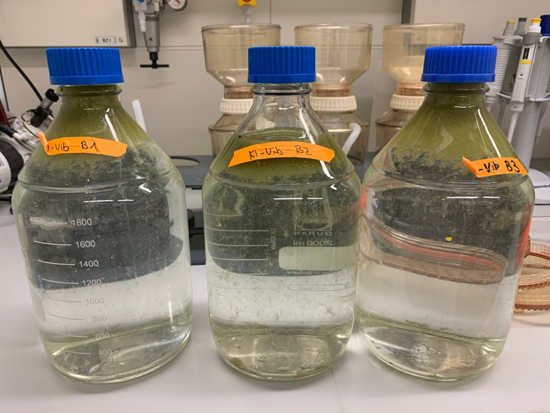
The samples were also streaked onto agar plates to identify the Vibriospecies, and suspected Vibrio Vulnificus colonies were inoculated. The cultivated bacteria were then tested using ddPCR to confirm its identity.
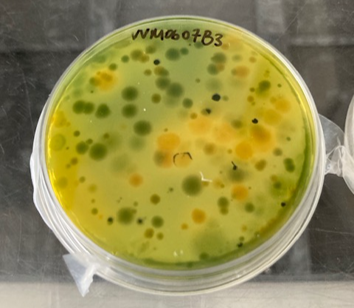
Later phases of the project would involve the comparison of measured environmental parameters with the emergence of Vibrio Vulnificus to determine the link between and the time lag between the two.
Reflection and Personal Experience
Prior to working at the IOW, I had no experience working in a biology lab, much less a microbiology one, and I felt very out of my depth when I first started. However, under the watchful guidance of my supervisors, I became more confident in my microbiology laboratory skills and was able to work independently. I greatly enjoyed my time in the IOW, especially with the research institute being within a 5 minute walk to the beach. On most days after work, I would head down to the beach and take a quick dip in the water or just bask in the sun. I would like to thank the researchers in the IOW, especially in the Environmental Microbiology group, for making me feel welcome and guiding me through my internship.