
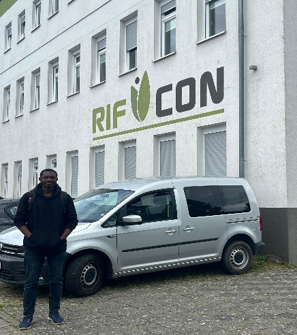
Every Summer Semester, Ecotox Master students do a 2-month internship or AMEO (Applied Module at an External Organization). Today, Joseph shares his AMEO experience at RIFCON GmbH in Hirschberg, Germany.
My name is Joseph Odah Ekwo, and I recently completed an 11-week internship at RIFCON GmbH in Hirschberg, with the Field Department, specifically the Invertebrate and Residue Field Studies team from May to August 2026. RIFCON is a scientific consulting company that runs Good Laboratory Practice (GLP) studies. These studies look at how pesticides affect food crops and non-target organisms like earthworms and bees, as part of the process needed to register new pesticides for use.
The internship started with introductory lectures on GLP concepts and terminologies on recordings of data during fieldwork, effects modelling, pesticide registration, environmental protection, and risk assessment. These lectures gave me the preparatory knowledge needed for fieldwork.
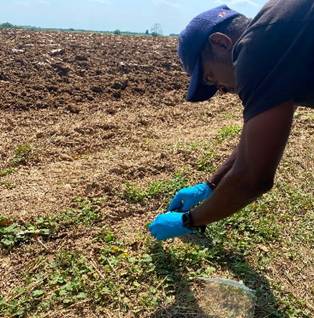
In the first few weeks, I helped with sampling plant residues in weeds and peas. I worked with the team on setting up study sites, collecting plant samples, recording environmental data, and safely transporting samples to the lab — all following GLP rules.
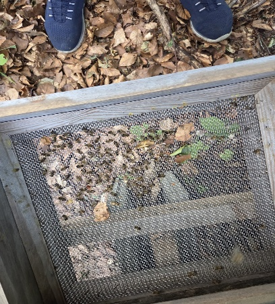
A greater portion of my internship was on honeybee studies. I helped with toxicity tests on bee larvae and field studies on bee colonies. This included tracking colony growth, assessing brood health and foraging activity, observing bee behavior, as well as recording mortality. I learned how to use Hiveanalyzer (a software), to analyze photos of honeycombs, also accompanied by data entry to help calculate brood termination rates.
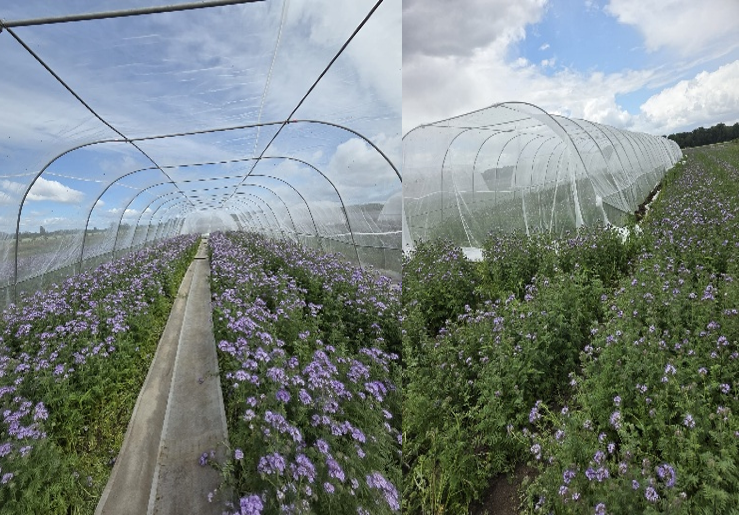
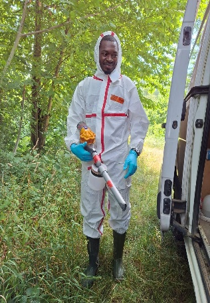
pesticide application
I also worked on studies looking at how pesticides affect earthworms and springtails (collembola) in farm soil in Hungary and then a pesticide residue study in Italy, collecting insects using pitfall traps and seeds in farm fields for pesticide contamination.
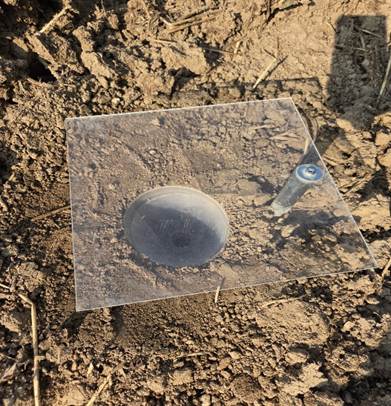
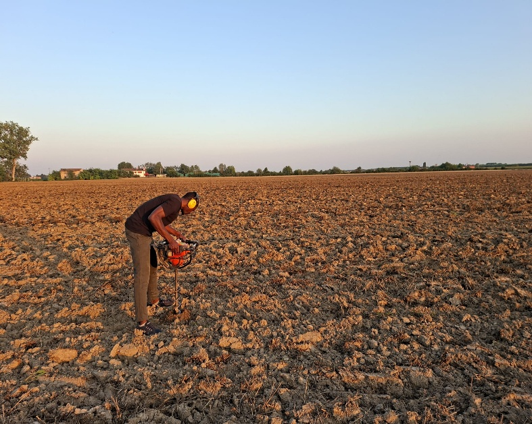
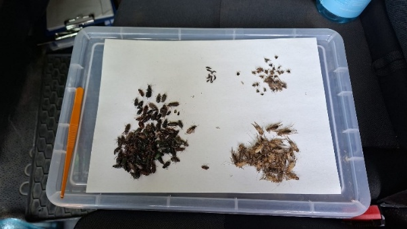
I also had the opportunity to work with the Umweltplanung (Environmental Planning) Department, focusing on nature and the conservation of endangered animal and plant species. This involves mapping, identifying nest locations, and implementing protective measures for ground-nesting species in open landscapes.
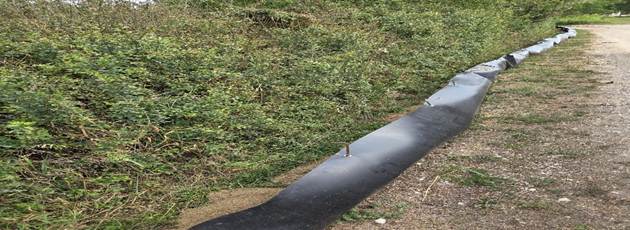
Fig 9. Perimeter set-up for endangered species
I am using this medium to thank the Invertebrate and Residue study team for the opportunity to work with and learn from them, as I have gained hands-on experience in environmental toxicology on land and for this, I am grateful. In general, this internship has given me the opportunity to experience both the theoretical and practical aspects of ecotoxicology.