
Every Summer Semester, Ecotox Master students do a 2-month internship or AMEO (Applied Module at an External Organization). In this series, Mounika Kollu shares her AMEO experience working at the Julius Kühn Institute, in Siebeldingen, Germany.
As part of my M.Sc. Ecotoxicology programme at RPTU Kaiserslautern-Landau, I completed my two-month Applied Module at an External Organisation (AMEO) at the Julius Kühn Institute (JKI), Institute for Plant Protection in Fruit Crops and Viticulture, located at Geilweilerhof, Siebeldingen, Germany. Under the supervision of Dr. Priyanka Solanki, I had the opportunity to gain practical experience in plant protection research through both laboratory and field work.
The Julius Kühn Institute (JKI) is the Federal Research Centre for Cultivated Plants in Germany. The Institute for Plant Protection in Fruit Crops and Viticulture conducts research on sustainable plant protection, integrated pest management, and environmentally friendly approaches to protecting vineyards and fruit crops from pests and diseases. During my internship, I had the opportunity to experience how laboratory and field research work together to support sustainable agriculture.
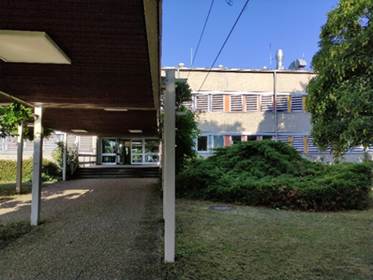
Figure 1. Entrance to the Julius Kühn Institute (JKI), Geilweilerhof, Siebeldingen.
My main project focused on evaluating the effects of pesticides commonly used in vineyards on mealybugs, an important grapevine pest, and Anagyrus, a parasitoid wasp that acts as a natural enemy of mealybugs. The objective was to assess the effects of these plant protection products on both the target pest and a beneficial insect involved in biological control.
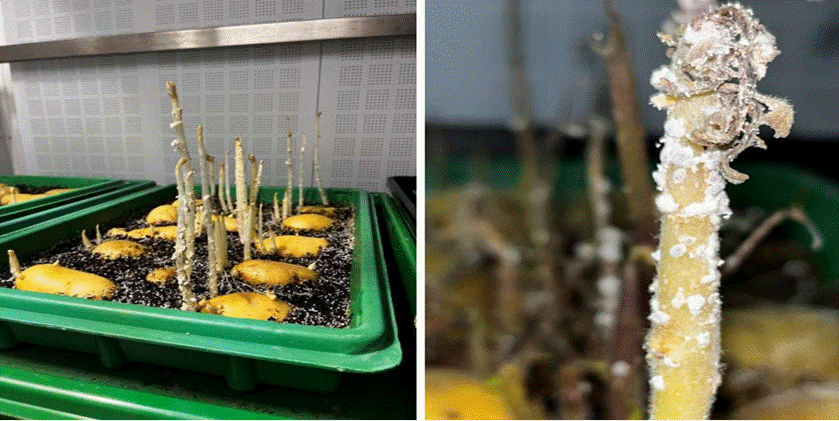
Figure 2. Mealybug cultures maintained on sprouted potatoes for the experiments.
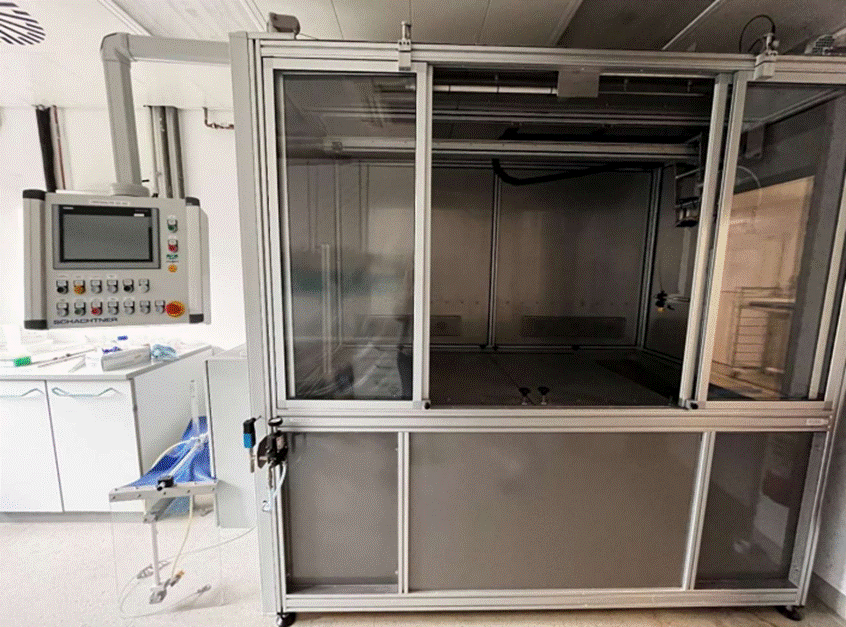
Figure 3. Laboratory spray chamber used for pesticide applications.
Throughout the internship, I was involved in different stages of the experiments. My work included checking the mealybug cultures maintained for the study, preparing agar-based medium for the experiments, and assisting with the experimental setup. A honey solution was provided as a food source for Anagyrus during the observation period. I also took part in pesticide applications using a laboratory spray chamber and monitored both mealybugs and Anagyrus under a microscope, recording observations throughout the study. One of the most highlights of the project was monitoring the emergence of adult Anagyrus, which helped me better understand its life cycle and its important role in biological control.
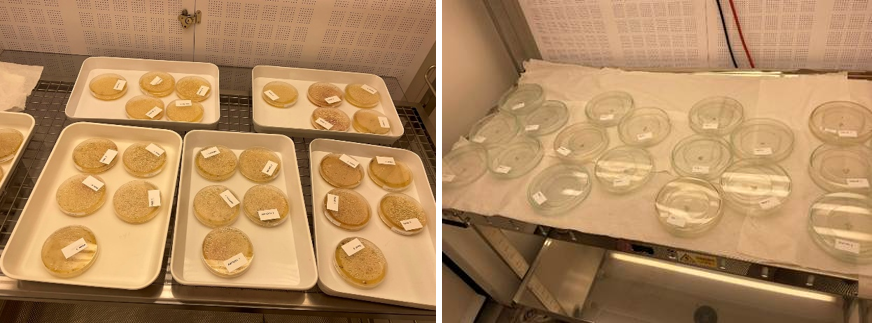
Experimental setup for monitoring mealybugs (Figure 4: Left) and monitoring Anagyrus (Figure 5: Right) following pesticide treatment.
In addition to my main project, I participated in field sampling in vineyards, where yellow pan traps were used to monitor insect populations. Collecting and processing these samples gave me a better understanding of how field observations complement laboratory research and contribute to pest monitoring programmes.
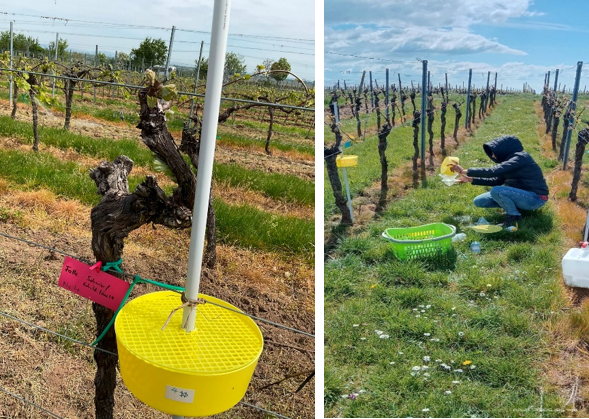
Figure 6 (left): Yellow pan trap used for insect monitoring in vineyards. Figure 7 (Right): Collecting insect samples from yellow pan traps in the vineyard.
Another interesting part of my internship involved examining field samples under a microscope. I learned how different insects and mites were identified, counted, and recorded, including Traubenwickler (grape berry moths), thrips, and several predatory and plant-feeding mites. I was also introduced to molecular techniques such as RNA extraction and multiplex PCR, which provided insight into additional research methods used at the institute. Every Friday, researchers and PhD students presented their ongoing projects during institute seminars, offering an opportunity to learn about the wide range of research being carried out at JKI.
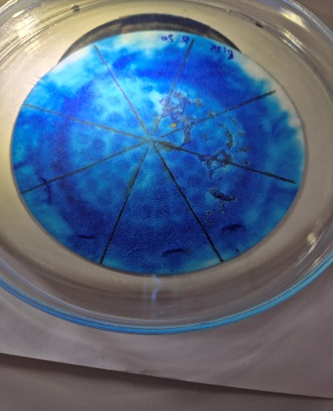
Figure 8: Examination and counting of insects and mites collected during vineyard sampling under a microscope.
This internship strengthened my understanding of plant protection research and demonstrated how laboratory experiments, field observations, and molecular techniques complement one another in developing sustainable pest management strategies. Beyond improving my practical skills in insect handling, microscopy, laboratory work, and field sampling, it also gave me a greater appreciation of the importance of protecting beneficial organisms while managing agricultural pests.
I would like to sincerely thank Dr. Priyanka Solanki for her guidance, patience, and continuous support throughout my internship. I am also grateful to Dr. Christoph Hoffmann, Gerti, and the entire JKI team for their kindness, encouragement, and willingness to share their knowledge. Their support, together with the welcoming and international working environment at JKI, made this internship both enjoyable and an invaluable learning experience.