
Every Summer Semester, Ecotox Master students do a 2-month internship or AMEO (Applied Module at an External Organization). Today, Justin Büchel shares his AMEO experience working at the Department of Environmental Science and Analytical Chemistry, Stockholm University.
Hej! My name is Justin and during summer 2026, I spent three months in Stockholm for my AMEO. My AMEO was at Stockholm University at the Department of Environmental Science and Analytical Chemistry. The Department consists of four larger units, namely Biogeochemistry, Atmospheric Sciences, Contaminant Chemistry and Exposure and Effects. I joined the Exposure and Effects Unit with PostDoc Hoi Shing Lo as my supervisor and helped him carry out an entire experiment.
Researching Microplastic Pollution
My work was centred around microplastic pollution and its effects on beach wrack degradation. For this, Hoi and I came up with an experimental design in which we exposed algae typically found in the Baltic Sea to a mixture of UV-aged polyethylene (PE), polyethylene terephthalate (PET), and polystyrene (PS) microplastics. My tasks mainly involved preparing everything we needed for the experimental setup: growing algae, labelling the algae with 13C and 15N stable isotopes, testing measurements with EA-IRMS and gas analysers, and much more. One day, we also did a short field sampling trip to the Baltic Sea. “Short” because it is only about a 15-minute walk from the university to reach parts of the Baltic Sea, where we sampled algae and sediment.
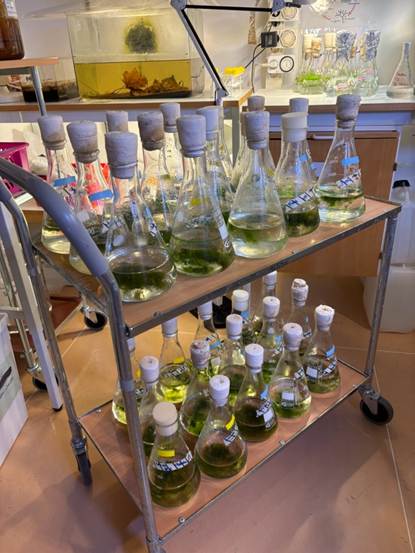
Fig. 1: Cultivating algae
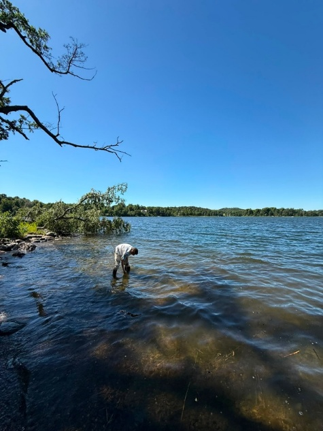
Fig. 2: Algae sampling
After all the preparations, we started the experiment with two different exposure scenarios for the microplastic mixture. We combined sediment, labelled and non-labelled algae and the microplastics and monitored the degradation under anaerobic conditions. This included regular gas analyses for carbon dioxide and methane, as well as analyses of the sediment, algae and water, together with enzyme and carbon source assays. After four and eight weeks, we “harvested” the samples, which meant conducting all these measurements on more than forty replicates, which was a lot of work as you need to process everything quite fast.
Lessons from the Experiment
Accompanying a study from the initial idea through to the experimental work taught me that science often involves trying things out, and that even experienced researchers often don’t know the answer beforehand. Instead, the approach is usually, “Let’s test it and see what happens,” and then adjust the research based on the results. I also learned that some of the biggest challenges are the ones nobody thinks about while planning the experiment. For example, we suddenly had to figure out how to cut open the glass bottles to retrieve our samples without destroying them entirely. Finding a solution took two days, several people, and a lot of broken bottles.
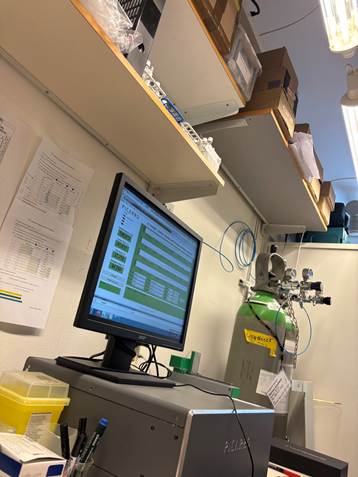
Fig. 3: Gas measurements
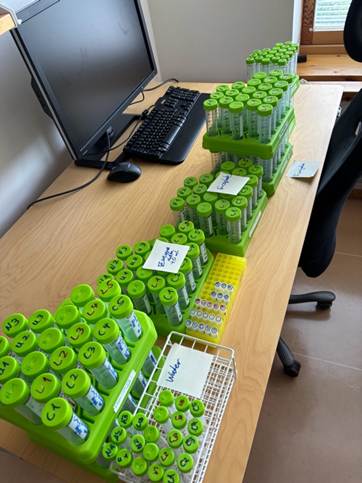
Fig. 4: All the different samples that had to be measured… and that was only one half. Quite a lot of waste…
Unfortunately, the Italian collaborators informed us only two weeks before the start of my internship that they would not be able to come due to unforeseen circumstances. This was quite disappointing, as I had been looking forward to learning HS-SPME-GC–MS methods from them and further improving my analytical skills. Unfortunately, that part of the project could therefore not take place.
Experiencing Swedish Culture and Nature
However, there was a lot to see and learn about Swedish culture and nature outside of the university. Although Stockholm is a large capital city, it is very easy to get out into nature! In June, Sweden celebrates its National Day and Midsommar, with the latter actually being the unofficial national celebration, as this is when all Swedes come together to celebrate. Most Swedes leave the big cities for Midsommar to celebrate with their families in the countryside (which is also why you won’t find many other students or researchers at the university during this time). However, there are also good opportunities to celebrate Midsommar in a traditional (and not too touristy) way not far from Stockholm. I went to the island of Grinda in the Stockholm Archipelago, where I got to make my own traditional flower wreath and watch parents and their children dance around the famous Midsommar pole while singing traditional songs.
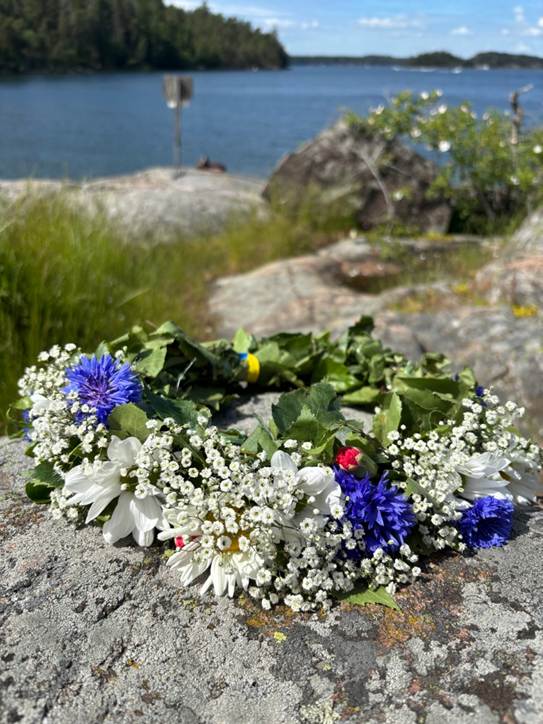
Fig. 5: My own handmade flower wreath!
If you are a lover of hiking, swimming, or kayaking, Sweden is a great place to be during the summer. On the many islands, in nearby national parks such as Tyresta, or even in the middle of the city around places like Djurgårdsbrunnskanalen or Lake Mälaren, there are plenty of opportunities to do all of that. In August, you can also start picking berries or mushrooms. But if you ask a Swede where to go, they will never, ever tell you their best spot, as their “kantarellställe” (chanterelle spot) is a closely guarded secret :). Luckily, it is quite easy to find them yourself; just head into a random forest and you will probably find plenty!
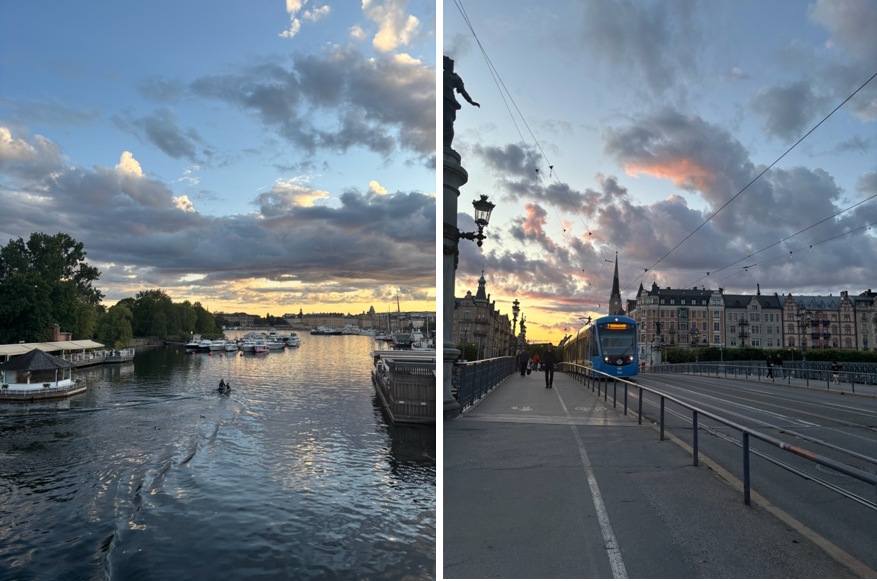
Fig. 6: Stockholm at night (yes, it was night already!)
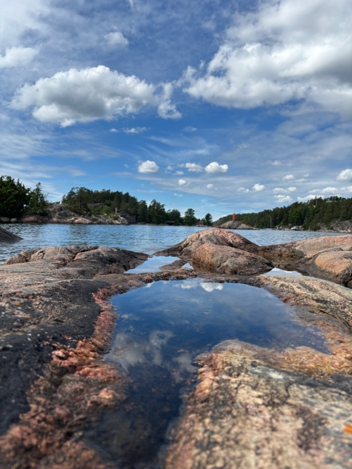
Fig. 7: Grinda island
Living in Stockholm
Finding accommodation can generally be quite tricky in a capital city like Stockholm. As a three-month research intern without a Master’s degree yet, I was not eligible for student housing in Stockholm or guest researcher housing at Stockholm University. However, since I did my internship between June and August, when universities in Sweden are basically on summer break, many Swedish students sublet their apartments during this time. Luckily, I found a German student studying at the Kungliga Tekniska Högskolan in Stockholm who was also doing an internship during the same period. I can recommend checking out Qasa or the (very old-fashioned) Facebook groups for accommodation. Stockholm is also quite spread out and consists of several islands. My apartment was in the Bromma area, so it was quite a distance from the university. However, Stockholm has a very good and efficient public transport system. With a tunnelbana and tvärbanan (metro and tram) station basically right in front of my apartment, it only took me 10-15 minutes to reach the city centre and about 30 minutes to get to the university. But on the other hand, I only had a ten-minute walk to the sea, where you can jump straight into the water and swim – and as the nights are long during summer in Sweden, you can also do that until 1 pm, with daylight still around!
I can highly recommend getting an SL travel card, as it makes it easy to explore both Stockholm and the surrounding area. For example, you can visit Uppsala or Dalarö, take the commuter ferries to Vaxholm, or even get discounted ferry tickets to the outer islands of the Stockholm Archipelago like Grinda, Sandhamn or Nåttarö.
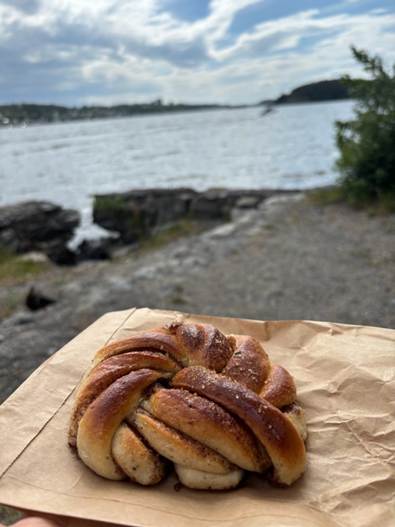
Fig. 8: Lots of kanelbullar (cinnamon buns) had to be tested!
Stockholm is a beautiful summer city, so I can highly recommend it. If you’re interested, check out the website of the Department of Environmental Sciences: https://www.su.se/english/divisions/department-of-environmental-science