
Pollutant exposure can trigger rapid evolutionary changes in aquatic insects. In this blog post, Nina shares insights from a multigeneration experiment on how evolution can influence the effects of pollutants on the aquatic insect Chironomus riparius.
Midges are frequently exposed to pollutants in their environment, especially during their aquatic larval phase. If concentrations are high enough, larvae die and never develop into adults. But what happens when you expose the larvae of midges to small amounts of pollutants over several generations? To answer this question, we conducted a six-month lab experiment at the Institute for Environmental Sciences. We? We are Sara, Sebastian, and myself, Nina, then three PhD students within the SystemLink graduate school, and I am writing about our journey in this blog post.
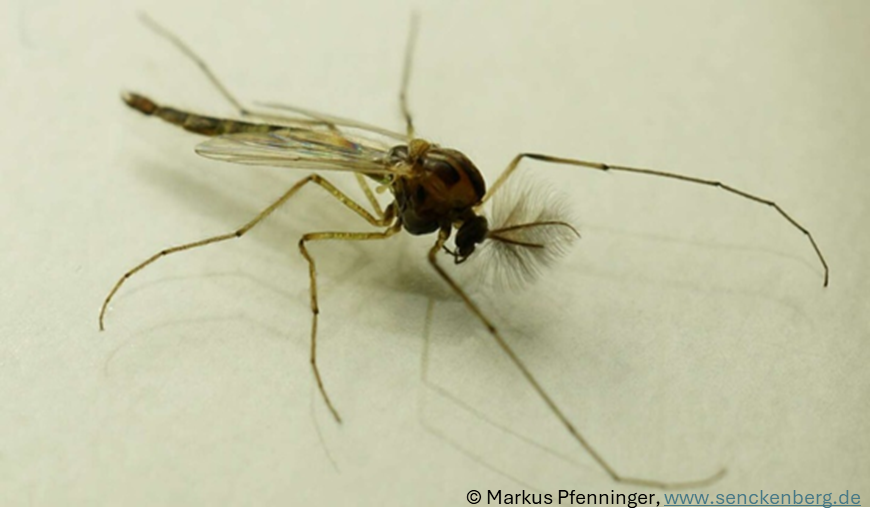
May I introduce: Chironomus riparius
Non-biting midges, the friendly cousins of mosquitoes, play an important role in most riparian ecosystems as they are a major food source for both aquatic and terrestrial animals. This is because of their ecosystem-spanning life style: adult midges typically lay their eggs on the water surface and the larvae live in the water and sediment of freshwater bodies before turning into pupae and emerging – much like dragonflies, mosquitoes, and many other insects. This also means that these ecologically important insects are exposed to pollutants in the water and sediment during a large part of their life cycle, which makes it relevant for us to test how sensitive they are to pollution. One important representative of these midges in ecotoxicological research is Chironomus riparius, which, with its moderate standard of living and short reproductive cycle of a few weeks, is an ideal model species for ecotoxicity testing.
Setting the stage
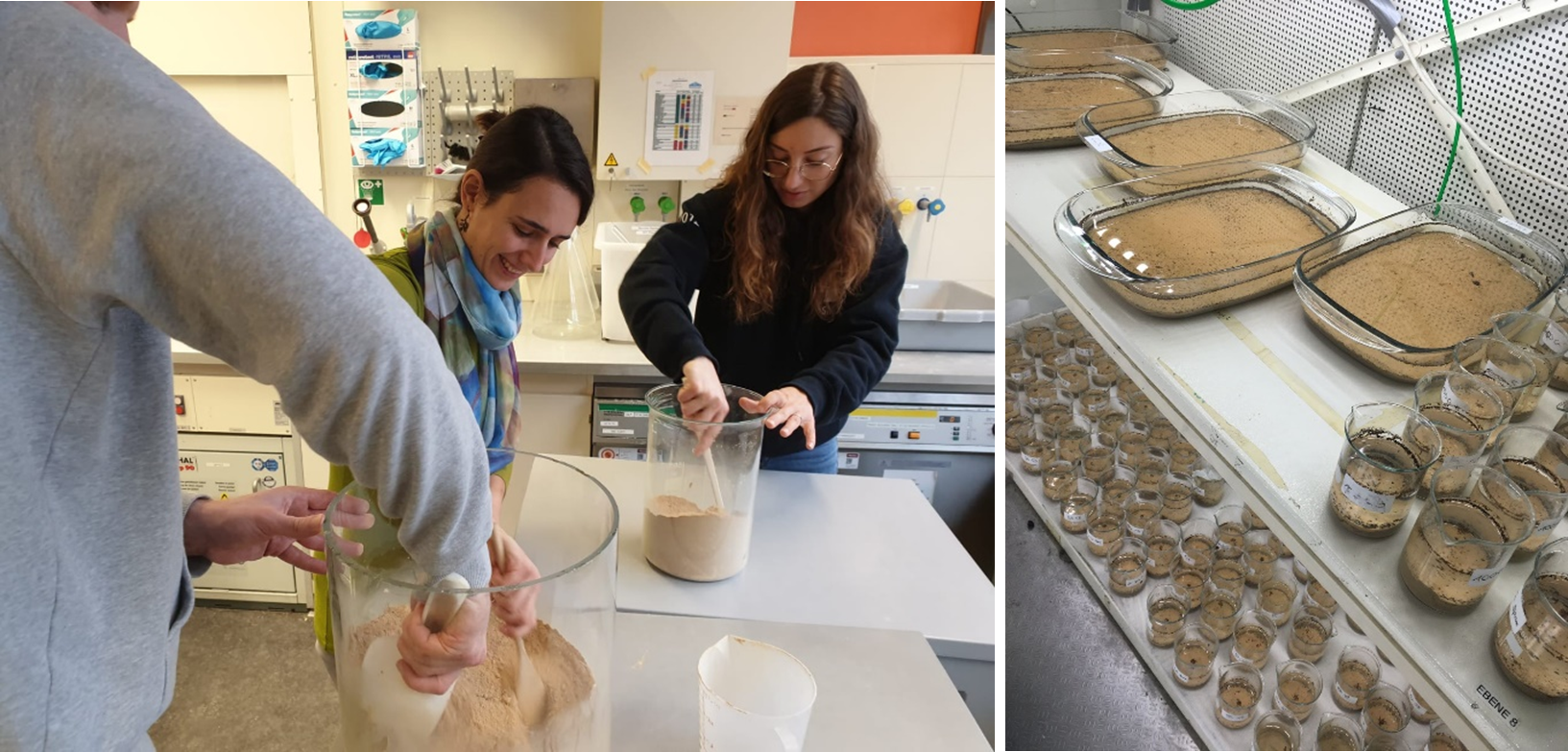
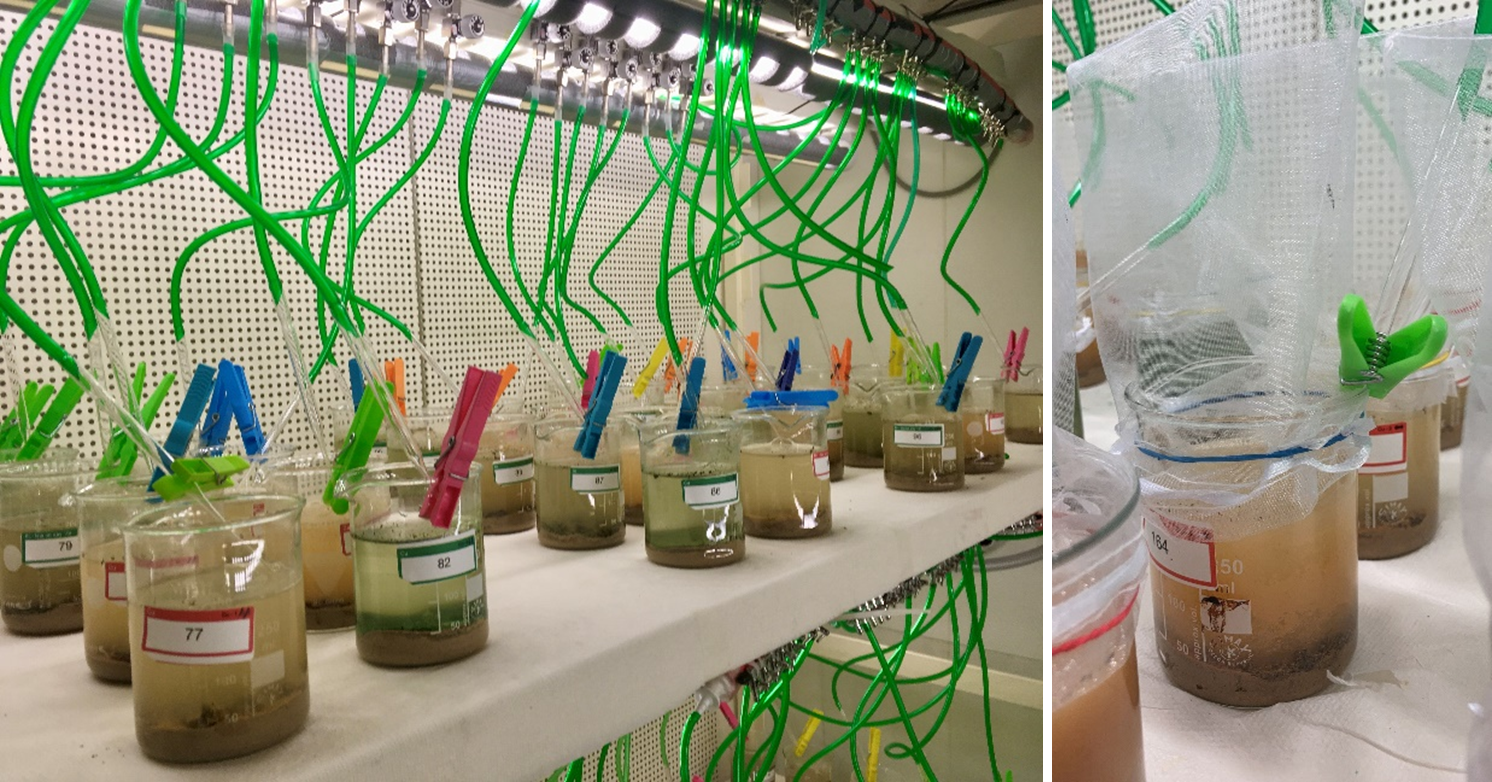
With enormous efforts, and supported by a whole fleet of five Master ecotoxicology students (thanks Patrick, Ghinwa, Sophie, Rafia and Sumaiya for your support throughout the experiment!), we set up the experimental cages for the midges. They needed a standardized sediment with enough organic material (sand alone is too boring), a carefully controlled water medium (water alone would be too easy), and net cages that prevent adults from escaping. We also added copper, one of our example pollutants, to the sediment of a third of the cages. We deliberately chose concentrations that were low enough to avoid population collapse, while still putting some stress on the midges, resulting in low to medium effects such as extended developmental time and some larval mortality.
Experimental evolution
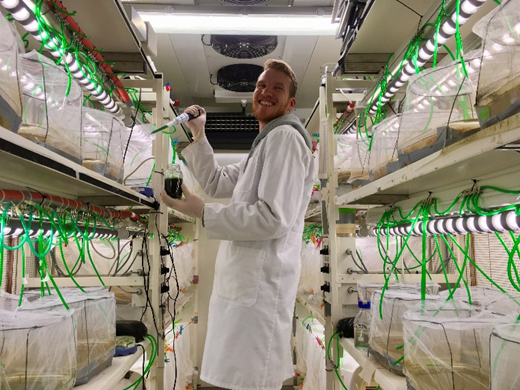
And then we just waited for six months to let evolution happen. Well, that’s of course not true, there was a lot of maintenance going on: midge larvae had to be fed (their favorite: commercial fish food), the water medium had to be checked for evaporation and regularly refreshed, and the aeration had to be monitored (midges are only happy when a steady stream of small air bubbles passes through the medium). And of course, Bti, our second example pollutant, had to be applied every two weeks. Bacillus thuringiensis israelensis (Bti) is a biocide typically used to target mosquitoes during their larval stages. It is not stable over longer periods, so we applied it repeatedly, roughly once or twice per generation. Individual developmental time in midge larvae varies quite a bit. By the end of the experiment, we assumed that we had around eight generations, although this is a rough estimate, and generations likely started to overlap over time.
The outcome
Before and after the chronic exposure to our two model pollutants, we tested the sensitivity of the midge populations. We exposed them to different concentrations of the pollutants, first before the experiment, and then again after six months, comparing both pre-exposed and unexposed (naïve) populations. We were interested in how the pollutants affected survival, developmental time, and body weight, and whether we could detect physiological changes in lipid and protein content or fatty acid composition. While we did find clear effects of the pollutants, the overall performance of the pre-exposed populations was largely similar to that of the naïve populations (with a few exceptions!). However, we had also collected a large number of larvae before and after the six-month exposure phase. Using these samples, we looked at responses on the genomic level. Here, we found various changes across all populations, but also some consistent patterns, for example in genes involved in detoxification. These responses differed between the copper-exposed and the Bti-treated midge populations and matched what we would expect based on the pollutants known modes of toxic action. Interestingly, we also found signs of adaptation in the unexposed control populations. Even without added pollutants, the midges were living in a densely populated and competitive environment, meaning that selection for the most efficient life strategies was still ongoing.
Why should you care?
The fact that midge populations (and likely other species with short reproductive cycles) show genomic responses to stress very quickly, sometimes before we observe clear changes in sensitivity endpoints (i.e., survival), suggests that we may underestimate how rapidly evolutionary processes can act under toxic exposure. Given this, we should be very careful about the prior exposure history of our study populations. At the same time, we need to acknowledge that test organisms maintained in the lab are not neutral: they are shaped by laboratory conditions, often over many generations. This means that a substantial part of the natural genetic variation present in wild populations is reduced or lost. As a consequence, standardized tests are conducted with individuals that have already persisted under laboratory conditions and therefore represent only a subset of possible responses.
So next time you hear about lab-based estimates of pollutant effects, keep in mind that the organisms behind these values come with a history – and that ‘standard’ test results may not be as universal as we often assume.
Want to know more?
Our results on the life-history and physiological effects of Bti and copper, as well as on the population genomic level, are now published:
- Kolbenschlag S, Pietz S, Röder N, Schwenk K, Bundschuh M (2024): “Phenotypic adaptation of Chironomus riparius to chronic Bti exposure: effects on emergence time and nutrient content”, Aquatic Toxicology. DOI: 10.1016/j.aquatox.2024.107013.
- Pietz S, Röder N, Kolbenschlag S, Schöndorfer A, Schwenk K, Bundschuh M (2025): “Effects of copper, food quality and exposure history on aquatic insect emergence: Insights from a multigeneration study”, Ecotoxicology and Environmental Safety. DOI: 10.1016/j.ecoenv.2025.118893.
- Röder N, Kolbenschlag S, Pietz S, Brennan RS, Bundschuh M, Pfenninger M, Schwenk K (2026): “Pollution-Driven Selection in Riparian Ecosystems: Genome-Wide Responses to Bacillus thuringiensis israelensis and Copper in a Non-biting Midge”, Molecular Ecology. DOI: 10.1111/mec.70263.
Article by: Nina Röder