
Every Summer Semester, Ecotox Master students do a 2-month internship or AMEO (Applied Module at an External Organization). Today, Vivien McGuire and Janna Schulte tell us about their AMEO experience at Fraunhofer Institute for Molecular Biology and Applied Ecology (IME), Schmallenberg.
We are Vivi and Janna. We completed our AMEO internship in June and July 2025 at the Fraunhofer IME in Schmallenberg. The institute specializes in molecular biology and applied ecology. During our internship we worked in the department of Ecotoxicogenomics.
In our project, we investigated potential neurological effects of dog chew bones on zebrafish embryos by conducting a modified Fish Embryo Toxicity (FET) Test. Dog chew bones are made from cattle skin, which is suspected to contain antiparasitic substances. Since cattle are treated with antiparasitics, which can accumulate in the skin and affect the nervous system of parasites, it is suspected that dogs may absorb these substances while chewing on dog chew bones, potentially leading to spasm. Genetic-level effects observed in our FET Test may therefore be crucial for the survival of dogs.
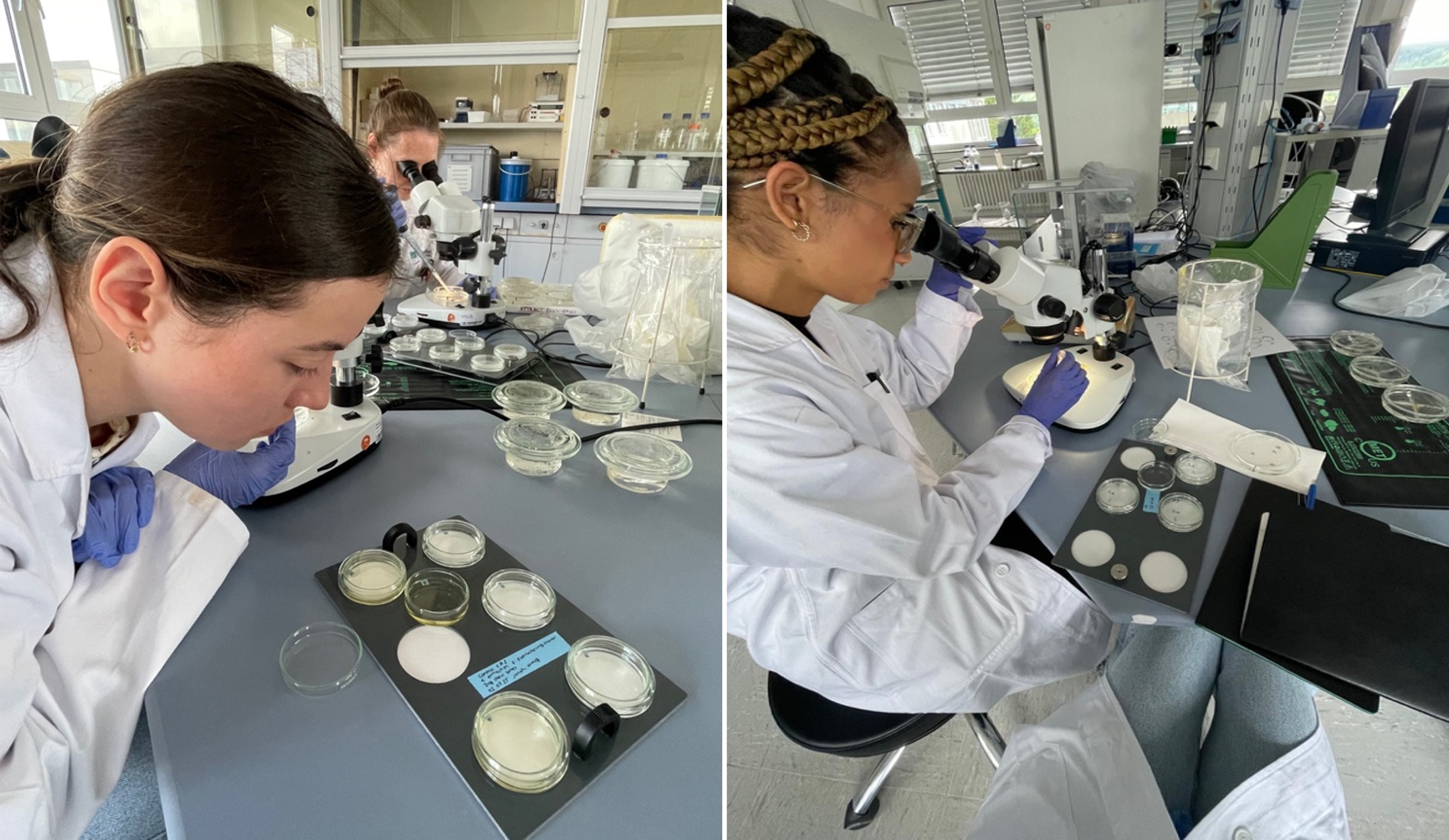
First, we had to develop a method for transforming the dog chew bones into powder. This took us quite some time as we tried different machines and experimented with dry ice and liquid nitrogen. Afterwards, we planned an extraction to simulate the digestion process in dogs. To perform the extraction, we prepared digestive juices and mixed them with the dog chew bone powder, following a protocol specifying incubation time, shaking, and pH value.
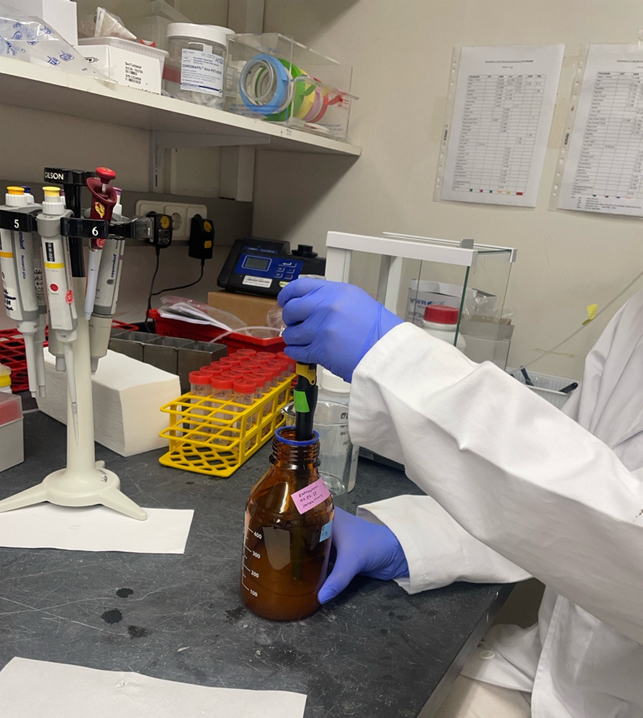
Subsequently, we conducted several preliminary FET tests and a main FET test. A FET test lasts four days. On the first day, we prepared the medium, adjusted its pH, heated the stock solutions, and prefilled the petri dishes. On the second day, we replaced the heated and pH-adjusted medium, selected fish eggs, and placed them into the petri dishes. Over the following days, we monitored the embryos for coagulation, mortality, hatching, and malformations. During this period, we replaced the heated and pH-adjusted medium once more.
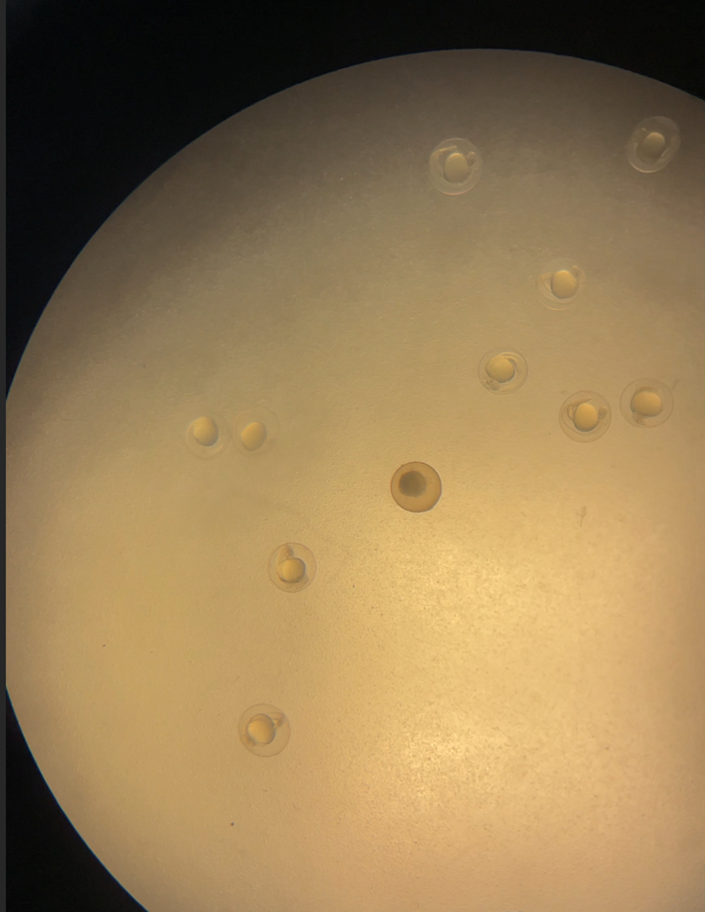
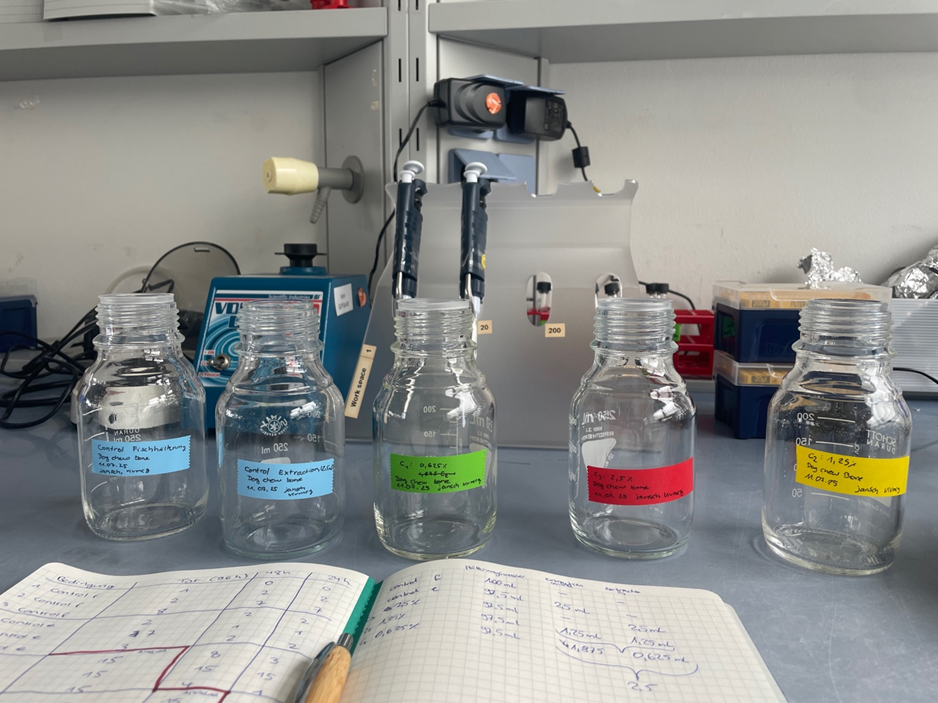
In the preliminary tests, we had to adjust the preparation of the medium, the composition and concentration of the medium, due to the residual activity of the digestive juices. From the main test, we extracted proteins and RNA and performed a Nanodrop analysis as well as Bioanalyzer measurements to determine the quantity and quality of the samples. Then, the samples were prepared for sequencing and investigating the effects of the antiparasitics on the genetic level.
Overall, we focused heavily on method development, as this was an extraordinary project that required us to find a way to crush the dog chew bones and adjust the FET test. Planning the extraction to simulate digestion was also a major part of the work. Beyond that, we greatly appreciated learning about the FET test, as it plays a crucial role in ecotoxicology and our future work.
We were very grateful that we could always count on our colleagues and supervisors when we had questions. Overall, the team at Fraunhofer IME was very kind and supportive. This motivated us to learn and expand our knowledge around ecotoxicology. We really enjoyed our time here and can recommend doing an internship.
By the way, we also recommend having a car available and arranging your own accommodation, which you have to pay for. However, we received a small payment.